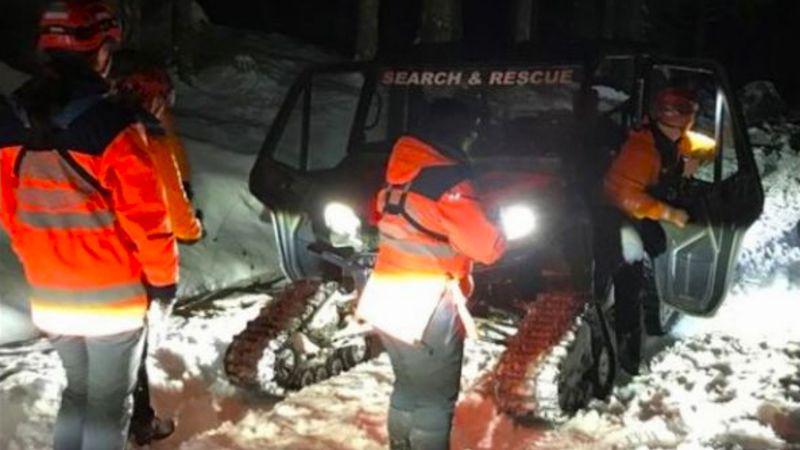
Image: Nick Rivers / Cell phone technology featured prominently in the rescue of two men after their truck tipped over in the snow on a rural Vancouver Island logging road / Jan. 17, 2024
SOS feature

Cell phone technology plays integral role in Vancouver Island search and rescue

Jan 21, 2024 | 6:00 AM

NANAIMO — A smartphone’s crash detection feature precisely showed where two injured men were located after their truck tipped over on a snow-filled rural logging road on Vancouver Island this week.

Arrowsmith Search and Rescue president Nick Rivers said it’s the first time his group has responded to a smartphone-sent SOS message via satellite from an area with no cell service.

Rivers said Oceanside RCMP relayed the message to their members, who responded on Wednesday, Jan. 17 just after 8 p.m. a dozen kilometers into the bush.

“The occupants of the vehicle didn’t even know that the phone had done it, they were actually unaware that we were responding,” Rivers told Pattison Media, who noted coordinates provided by Apple were within three meters of the scene.

Rivers said Oceanside RCMP dispatched a heat-detecting drone source which was traced to the location provided by Apple.

The rescued men were conscious, and treated on scene for minor injuries, with Rivers saying the men were taken to Hwy. 19 to be transferred to BC Emergency Health Services personnel.

“They were pretty cold and happy to survive,” Rivers said.

Nearly 20 Arrowsmith SAR members responded in several chained 4X4 trucks, along with a utility vehicle with tracks.

Crash Detection, available in iPhone 14 or later models, is “an amazing feature,” Rivers praised.

Previously, Arrowsmith SAR were aided by a “ping” from a cell tower to help find and rescue distressed subjects in the backcountry.

“Whereas now with this new feature and technology that these phones are carrying, that ability extends basically globally,” Rivers said.

If the Crash Detection technology was not present, Rivers said their response would have been significantly more challenging and the men could have been stranded for potentially an extended period.

“It would have waited until somebody had reported them missing, which may not have been until the next morning, all we would have to go on basically is the logging roads, that’s a massive, massive road network.”