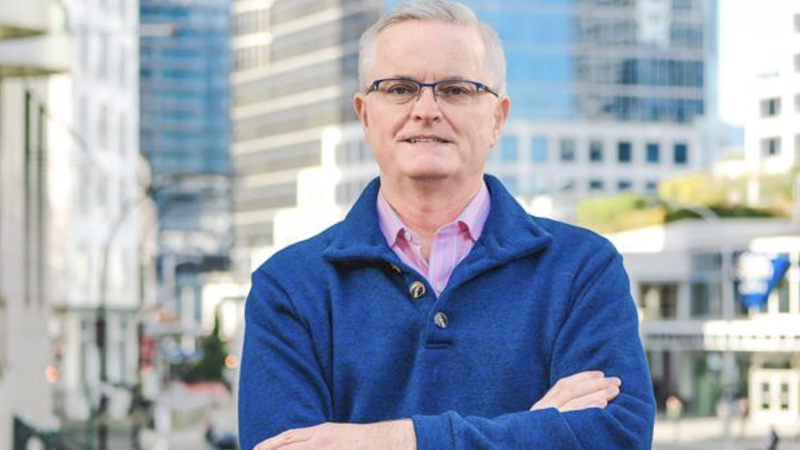
Barry Penner, KC, a former Chilliwack MLA who served as attorney general of British Columbia. He now serves as chair of the Energy Futures Institute. (Image Credit: Barry Penner, KC.)
Public polling

Former Chilliwack MLA turned energy analyst touts polling showing BC wants more heating options, not restrictions

Oct 11, 2026 | 7:17 AM

CHILLIWACK – As B.C. residents celebrate Thanksgiving this long weekend and temperatures feel like fall, a former Chilliwack MLA turned energy analyst is touting the results of an public opinion survey that finds strong support for allowing choice in how homes and buildings are heated.

The Ipsos survey, conducted September 8 to 14 and commissioned by the Energy Futures Institute, found that 61 per cent of British Columbians support allowing builders of new homes and commercial buildings to choose electricity, natural gas or a combination of both for space and water heating, compared with only 20 per cent opposed.

Support spans the political spectrum, including 62 per cent of NDP supporters, 65 per cent of Green supporters, and 72 per cent of Conservative supporters.

“Thanksgiving is a time when families gather in warm homes, but the question of how those homes will be heated in the future deserves more public attention,” said Barry Penner, KC, Chair of the Energy Futures Institute, who previously served as attorney general. “British Columbians support having a choice between electricity, natural gas or a combination of both, rather than having only one option effectively imposed by government policy.”

The results also indicate widespread support for greater flexibility in provincial electric vehicle mandates.

“What’s particularly noteworthy is that a majority of supporters of every major provincial party favour heating choice,” Penner said. “However, some local governments have already effectively removed this choice for new construction, and provincial government policy currently intends to impose these restrictions province-wide in just over three years. These policies even take hybrid heating systems, which combine the benefits of electricity and natural gas, off the table and put more strain on our already stretched electricity system.”

In conjunction with the province’s CleanBC policy, new buildings are intended to achieve zero operational greenhouse gas emissions by 2030. The Zero Carbon Step Code progressively tightens limits on emissions from space and water heating, effectively ruling out many conventional natural gas and dual-fuel / hybrid heating systems. BC Hydro’s own analysis found that Lower Mainland homes with dual-fuel systems — electric heat pumps backed by natural gas furnaces — have approximately 75% lower winter peak electricity demand than homes using all-electric heat pumps. These systems can use electricity in milder weather and natural gas during cold spells.

“The government wants to restrict natural gas heating in new buildings, even though BC Hydro’s own research shows dual-fuel systems can dramatically reduce winter peak electricity demand,” said Penner. “Why increase pressure on the electrical grid when BC Hydro has been forced to import up to 25% of our domestic electricity needs at times, mostly from the United States, at a cost of $2.1 billion over the past three years?”

University of Victoria research estimates that hybrid-heating could avoid up to 1,400 megawatts of additional electricity capacity needs by 2050 in the Lower Mainland alone, which is more than the 1,200-megawatt capacity of the $16 billion Site C dam.

BC Hydro’s 2025 Integrated Resource Plan also projects that broader building-electrification policies could add approximately 10,300 gigawatt-hours of annual electricity demand by 2050, or the equivalent of two more Site C dams.

“This is about affordability as well as consumer choice,” Penner said. “If government policies require more homes to depend entirely on electricity on the coldest winter days, BC Hydro will face even greater pressure to borrow and spend billions of dollars expanding its electricity system. These costs will ultimately be borne by BC Hydro customers.”

The Ipsos survey also found 70 per cent support for allowing regular non-plug-in hybrid vehicles to count at least partially toward BC’s mandated zero-emission vehicle sales requirements, with only 14% opposed. Currently, regular hybrids do not qualify, despite being more fuel-efficient than conventional gasoline-powered vehicles.

“British Columbians clearly want options when it comes to which vehicles they drive,” Penner said. “Seven in ten support recognizing regular hybrids – many of which are manufactured in Canada – under the EV mandate. These vehicles can reduce fuel consumption and emissions without requiring drivers to rely on charging infrastructure, but provincial rules do not give automakers compliance credits for selling them. Meanwhile, fully-electric passenger vehicles sold in BC are currently manufactured outside Canada.”

BC’s zero-emission vehicle mandate requires automakers to meet a 26% sales compliance target for the 2026 model year, increasing to 75% by 2035. However, only 14% of survey respondents said that an all-electric vehicle is most likely to be their next vehicle. Another 15% selected a plug-in hybrid, 11% a regular hybrid and 27% a gasoline or diesel vehicle.

“Government policy should reflect the practical needs and preferences of British Columbians,” Penner said. “Whether it’s heating our homes or choosing our next vehicle, people want affordable, reliable options. This Thanksgiving, the message is straightforward: British Columbians want energy choice, not more restrictions.”

The Ipsos poll was conducted September 8 to 14, 2026, on behalf of the Energy Futures Institute. A sample of 800 adult British Columbians was surveyed online and weighted by region, age, gender and education in accordance with Census proportions. Ipsos reports a credibility interval of ±4.0 percentage points, 19 times out of 20, with wider intervals for population subgroups.