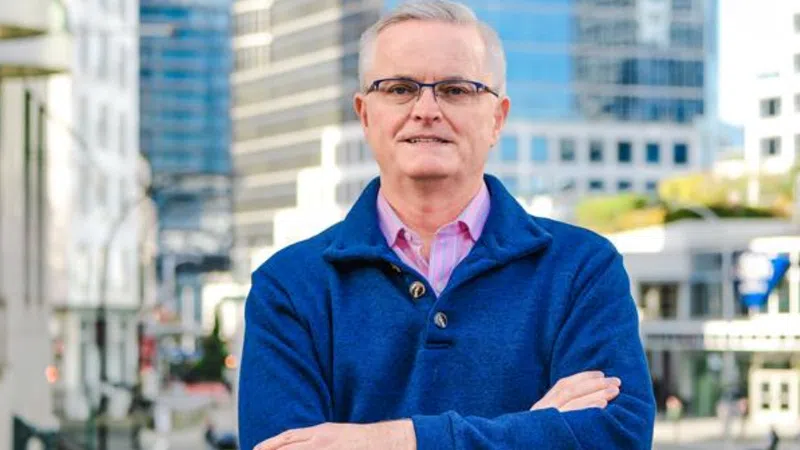
Former four-term Chilliwack MLA Barry Penner. (Image Credit: Energy Futures Institute.)
EV mandates

Chilliwack energy analyst says it’s time for BC to unplug its rigid EV mandate

Feb 9, 2026 | 9:06 AM

CHILLIWACK – Former Chilliwack MLA turned energy analyst Barry Penner is applauding the federal government’s decision to swap what he calls a rigid electric-vehicle sales mandate with a more practical approach that better reflects economic and consumer realities.

Rather than imposing rigid sales quotas, Penner says the feds are pivoting toward fleet-wide greenhouse gas emissions reductions, with longer-term electric-vehicle adoption targets and greater flexibility for automakers — including recognition of efficient hybrid vehicles, such as those made in Canada.

“This is a welcome change of direction by the federal government,” said Barry Penner, KC, chair of the Energy Futures Institute. “As I told MPs last fall, trying to force Canadians to buy electric vehicles through heavy-handed sales mandates is unrealistic and economically damaging. A far better approach is to improve fuel efficiency and emissions performance on a fleet-wide basis, while continuing to invest in charging infrastructure, strengthening domestic electricity supply and allowing consumers to choose vehicles that meet their family’s needs and budgets.”

Penner, a four-term MLA who served as B.C.’s attorney general and in other ministerial roles from 1996 to 2012, says the move is consistent with recommendations he made directly to MPs during a meeting of the House of Commons Standing Committee on Environment and Sustainable Development in Ottawa on November 6, 2025.

“This is the type of course correction that was needed, although even the revised EV sales targets seem aggressive,” said Penner. “An emissions-based framework reduces emissions while acknowledging real-world constraints in infrastructure and affordability.”

Penner said the federal shift should be matched with immediate action by the B.C. government to repeal its own electric-vehicle sales mandate — officially known as the Zero-Emission Vehicle (ZEV) program — when the B.C. lgislature resumes sitting this week.

“If Ottawa can recognize reality and abandon a failing mandate, British Columbia should do the same — and do it immediately to avoid further costs to consumers and the economy,” said Penner. “A one-page piece of legislation is all that is required to repeal this harmful program.”

British Columbia’s current 2026 model-year mandate requires that 26 per cent of all new vehicle sales be zero-emission vehicles, even though the most recent Statistics Canada data show that ZEV sales in BC have fallen sharply — down 35.1 per cent over the past year — to just 16.7 per cent of total new vehicle sales.

“Nothing about BC’s policy makes sense,” said Penner. “It’s clearly out of alignment with consumer behaviour and economic reality. It does not reduce costs or improve public confidence. It discourages the purchase of made-in-Canada hybrids while encouraging the purchase of imported electric vehicles, since no family-friendly EVs are made in Canada.”

Penner also highlighted growing concerns about electricity supply and energy security. BC Hydro has been a net importer of electricity from the United States for three consecutive years.

“To be consistent with a Canada-first approach, the electricity used to power electric vehicles in Canada should be produced in Canada,” said Penner. “Continuing to push aggressive EV sales targets while relying on imported electricity from the U.S., where a majority of their electricity comes from fossil fuels, undermines emissions goals and energy sovereignty.”

Penner said British Columbia should follow Ottawa’s lead by repealing its ZEV sales mandate and leaving vehicle standards to the federal government, and amend other policies that are driving up electricity demand before BC has sufficient domestic generation capacity. 

“That would support Canadian manufacturing, respect consumer choice and reduce our reliance on imported electricity,” said Penner. “At a time when Canada’s economic and energy sovereignty is under pressure, British Columbia needs practical, made-in-Canada solutions — not rigid policies that are out of step with reality.”