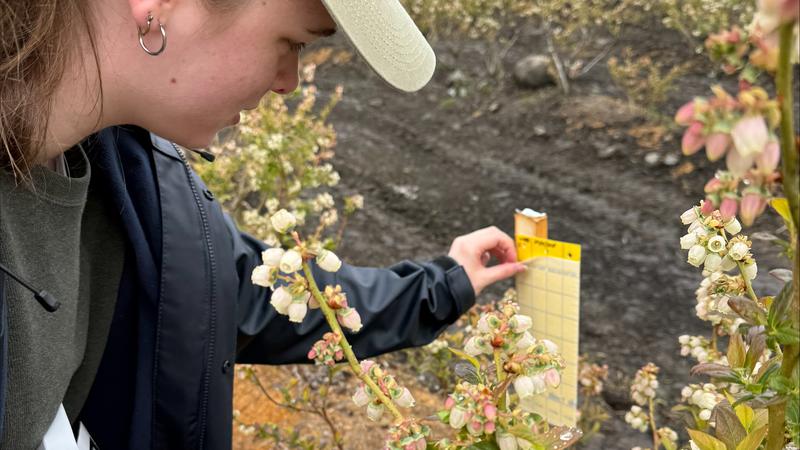
Image: Student Emily Foster setting a leafhopper trap / UFV / Provided
INSECT RESEARCH

UFV researcher co-leads national project tracking invasive leafhoppers

Jul 12, 2025 | 10:39 AM

CHILLIWACK — Researchers from the University of the Fraser Valley (UFV) are tracking a wave of plant-eating leafhoppers—and arming themselves with information—before they arrive in British Columbia.

“Most of our other crops don’t have leafhoppers right now, but what we’re seeing is that leafhoppers that used to be restricted to the US and further south are starting to show up in Ontario and Quebec, and even Nunavik,” noted Dr. Lauren Erland. “With that comes the risk of additional plant diseases.”

Dr. Lauren Erland is co-leading Project Leaf Hope, a national effort partly run out of UFV’s BERRI (Berry Environmental Resilience Research & Innovation) Lab. Her BERRI lab will focus on blueberry and strawberry crops this summer, but some grape and blackberry growers have already seen the pests in B.C.
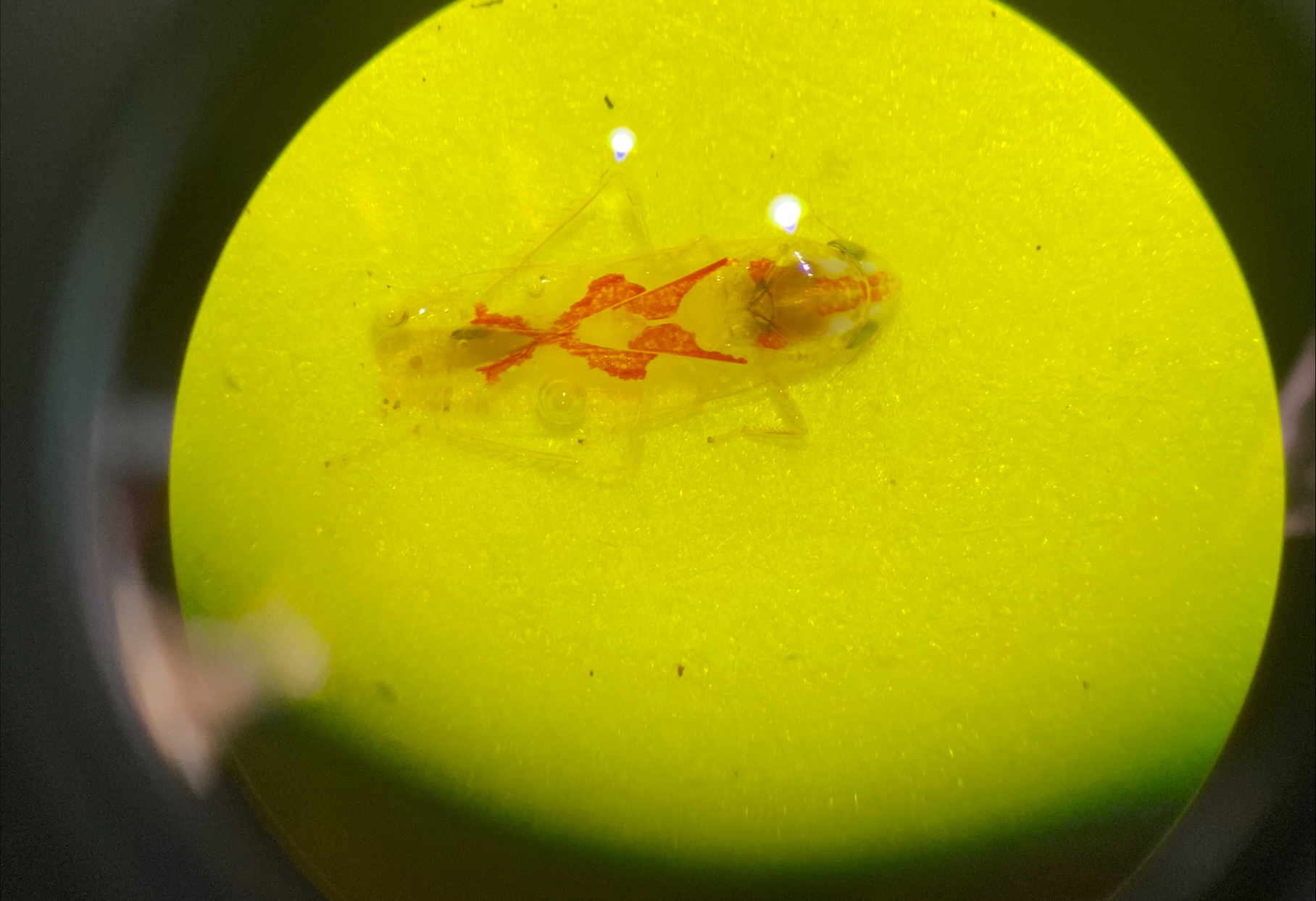
A leafhopper seen under a microscope. / UFV / Provided

“Leafhoppers are an agricultural pest similar to aphids,” explained Dr. Erland. “They extract the inside content out of plant cells, which makes them disease spreaders for plants in the same way mosquitoes are for humans.”

The insects may carry plant diseases, such as false blossom and blueberry stunt, which could become an issue out in western Canada.

“Our goal is to monitor for leafhoppers and these types of diseases,” she said. “As we have warmer summers and warmer winters, pests migrate further and further north, and we want to know the minute they show up.”

To counter the potential invasion, the BERRI Lab aims to develop smart climate stations and traps that capture insects without requiring a human scout in the field, which could also help fine-tune the use of insecticides.

Project Leaf Hope is led by Université Laval in Quebec City and co-led by research groups in Quebec, Ontario, Nova Scotia, Alberta, Manitoba, Saskatchewan, and B.C. The pan-Canadian study is funded by a Natural Sciences and Engineering Research Council of Canada (NSERC) Alliance Grant in sustainable agriculture.