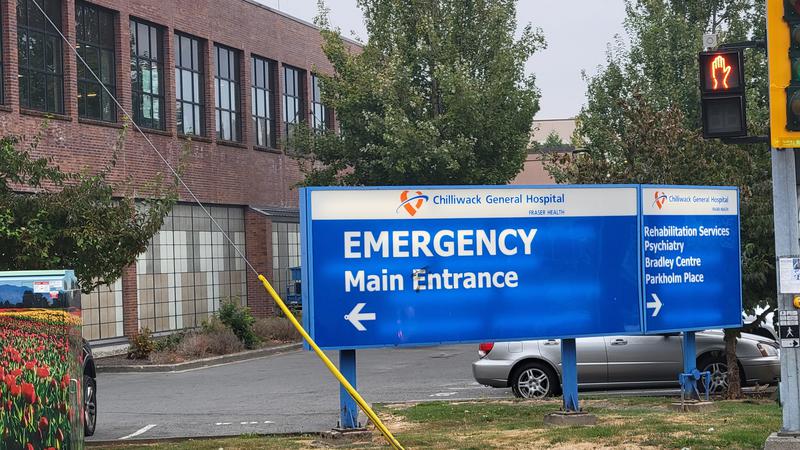
Image: M. Vanden Bosch / PML / Fraser Health Authority has now acknowledged the acute nursing shortage at Chilliwack General Hospital and says while some surgeries may be rescheduled, it's working towards a long-term staffing plan.
Chilliwack Hospital

Fraser Health acknowledges acute nursing shortage at Chilliwack General Hospital, says some surgeries may be rescheduled

Sep 14, 2022 | 9:00 AM

CHILLIWACK — A spokesperson for Fraser Health says it’s aware of the acute nursing shortage at Chilliwack General Hospital and is actively working towards a long-term plan.

Specialist physicians, operating room nurses, nursing managers, and Chilliwack General Hospital administration met last week Wednesday, September 7 in a town hall-style meeting to address the acute nursing shortage in the operating room (OR).

The meeting lasted nearly two hours in what was described as a crisis situation by some specialist physicians.

“As part of our collaborative work with staff and medical staff at Chilliwack General Hospital, we held a town hall on September 7 to discuss the impact of staffing issues on surgical services at the hospital,” FHA spokesperson Nick Eagland said in a statement. “The town hall provided staff and medical staff with an opportunity to ask questions and provide feedback about the work we are doing to support our patients over the long term.”

The hospital had intended to open up a fourth operating room per day, but chronic staffing shortages have only allowed Chilliwack Hospital to barely maintain three ORs daily, until the recent reduction to two ORs a day.

A Chilliwack doctor, who spoke anonymously because Fraser Health has the power to revoke the hospital privileges of employees who speak out, said after the new schedule was issued to accommodate the fourth operating room per day, eight out of 21 nurses who can work in the OR resigned, without any new staff coming in at the time. It created an untenable staffing situation and prompted an eventual reduction in services.

“That is 8 out of 21 positions,” the physician said. “In any real business, if more than 1/3 of the essential workers left after administration imposed a change there would be heads rolling and an immediate rollback of the changes. But here they keep saying they can’t do anything because of the contract provisions, and no one is losing their job.”

Nursing managers have been extremely diligent in reaching out to other ORs from across the FHA network, which stretches from Burnaby Hospital to Fraser Canyon Hospital in Hope, including an offer to pay for mileage. Nursing managers were even calling, emailing and posting inquiries on their own personal time, logging countless unpaid hours.

However, there is some degree of optimism now that there are plans to return to the original schedule of three ORs a day, not four. Further, additional nurses have been successfully recruited from other hospitals in the province. There are plans to train approximately 11 nursing staff, including RNs and licensed practical nurses (LPNs), to help fill the gap at Chilliwack General Hospital.

Meanwhile, Fraser Health stresses that it is aware of the situation at Chilliwack General Hospital and has a plan in place.

“It is important that all people who come to us seeking surgical services receive timely access to the care they need,” Eagland said in an emailed statement. “Currently, due to a nursing shortage in our operating rooms at Chilliwack General Hospital, some patients receiving these services at the hospital may have their procedures rescheduled. We are working with our surgical network to ensure our patients receive the services they need as quickly as possible.”

Eagland says Fraser Health will continue providing surgical services in Chilliwack contingent upon a patient’s urgent needs and prioritization by their surgeon.

“This includes cancer patients and other high-priority surgeries. Fraser Health is working closely with surgical staff and medical staff at Chilliwack General Hospital to ensure there is minimal impact to our patients and we have a long-term plan in place to support our patients,” Eagland said. “We are actively recruiting staff to fill vacancies at the site and are providing enhanced training to staff interested in working in the operating room. We are also inviting staff from other areas in our region to pick up additional shifts in the operating room.”

Eagland did not indicate if staff in other FHA hospitals have responded to Chilliwack’s urgent need.

The Chilliwack doctor said while four OR staff were mandated to work in the past six months, there was constant pressure to take on more and more unfilled shifts because of the pronounced staffing shortage. The breaking point came when the schedule change was announced.

“I believe that they don’t count coercion as a mandate,” the doctor said. “So they can say that only four shifts were mandated, but the nurses say that every Friday anyone working is asked repeatedly if they will work on the weekend, and they get asked over and over until someone breaks.”

One nurse who left in the last six months, and spoke to Fraser Valley Today on the condition of anonymity, cited work-life balance as an essential consideration.

While the presence of LPNs is a start, the anonymous Chilliwack doctor said they cannot render nearly as many services as a qualified RN.

“The mix of LPN’s and RN’s is another complicating problem,” the doctor said. “Most nurses want to scrub at the table, but there also needs to be a circulating nurse that can get supplies or drugs. That is where the problem arises. RNs can handle all of that, LPNs can’t. They are not able to administer drugs in certain situations, and they must always work ‘when a r​egistered nurse is immediately available.’ That means they can’t work with another LPN on call. So the more LPN’s you hire the circulating, night and weekend work falls to the shrinking number of RNs. From the very emotional comments of the RNs, the amount of after-hours work is not compatible with any reasonable life.”