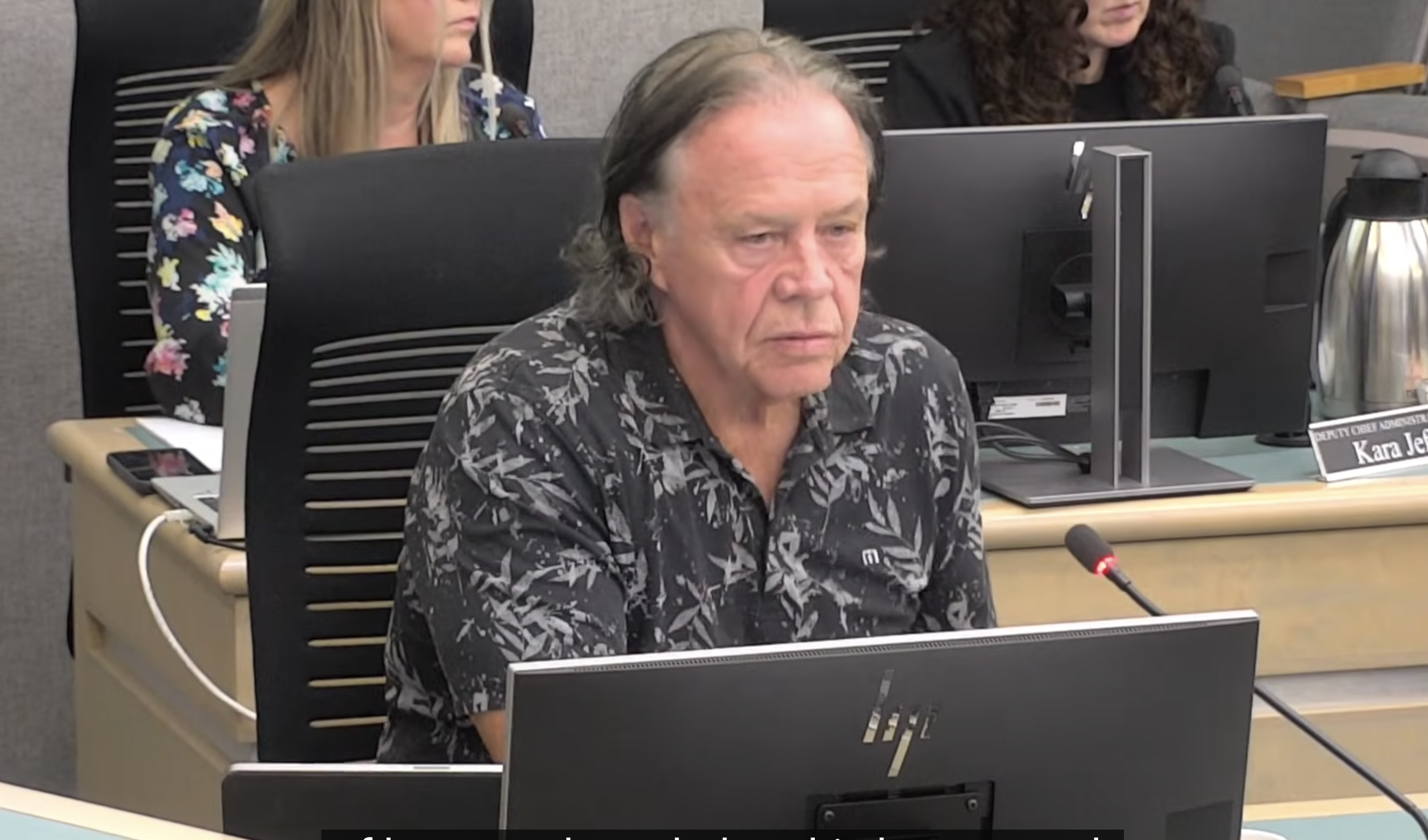
Chilliwack Councillor Bud Mercer, a former RCMP member and assistant commissioner with 35 years of policing experience. (Image Credit: City of Chilliwack.)
Funding request

Restorative justice to resume immediately in Chilliwack, as former RCMP member touts value to police, Crown

Oct 13, 2026 | 8:53 AM

CHILLIWACK – With 35 years of policing experience under his belt, including time spent as an assistant commissioner in the RCMP, Chilliwack Councillor Bud Mercer said the loss of Chilliwack’s restorative justice a year ago was one less option for police and Crown prosecutors.

During a discussion item at last week’s council meeting on whether to award $86,373 to the Abbotsford Restorative Justice and Advocacy Association to revive a restorative justice program locally, Councillor Mercer said he was “horribly aware” of what happened when Chilliwack’s program dissolved in fall 2025.

“I’m intimately aware of how much work this has caused. I’m also horribly aware of the impact of not having a restorative justice program in Chilliwack has caused in the vacancy of the toolbelt for police and Crown counsel,” Mercer said. “Not having it, or having limited access to it, has a profound impact.”

Mercer said it offers young people and adults a chance to be referred to restorative justice, rather than go through the court system, which, by his own admission, can take quite a while. And not everyone is an ideal fit for charges, Mercer said.


“What this program does for the police is it offers an opportunity, especially for young people but adults as well,” Mercer said. “When they go sideways and make a left turn instead of a right and a bad decision, it gives police an opportunity, other than courts and charges, by referring them to restorative justice. There’s so many benefits to that step. If they go to court, they might get a subpoena for a year from now. If they go to restorative justice, they’re going to meet with them on Monday. There’s an immediate accountability for a bad decision.”

Mercer said the criminal justice system should not reflect a one-size-fits-all approach. In other words, restorative justice should be pursued when it is deemed appropriate.

Councillor Bud Mercer. Of note, Mercer is not running for reelection in this month's municipal election.
Councillor Bud Mercer. Of note, Mercer is not running for reelection in this month’s municipal election. (Image Credit: Bud Mercer.)

“It’s also there for our court systems where they’ll get people who have slipped through the police and have made a decision to charge, and maybe the court and the Crown believe, you know, maybe this isn’t the best place for them,” Mercer said. “They refer people to the restorative justice program, and not having that in our community is a terrible handicap, and I think a missed opportunity for the city, the police and the Crown to deal with people who really shouldn’t be in the court system.”

At last week’s meeting on Tuesday, October 6, Councillor Chris Kloot sought to clarify with Karen Stanton, director of public safety and social development for the City of Chilliwack, when restorative justice programs might resume in Chilliwack.

“It’s been a year since this gap has been in place. I’m happy to support this today,” Kloot said. “Should this be supported around the table. My question is, does this begin immediately?”

Stanton replied, “That’s correct. There is a work plan attached to the staff report that outlines some detailed activities that will take place in the coming months, and the service provider has indicated they have capacity to start immediately.”

A staff report from Stanton revealed that the Chilliwack Restorative Justice Association was dissolved in fall 2025. Once it was disbanded, staff from the City of Chilliwack explored a range of options to re-establish restorative justice services in Chilliwack, as restorative justice has been identified as a priority in both the Chilliwack Community Safety Plan and the UFVRD RCMP Strategic Plan. Stanton’s report indicates restorative justice has been recognized as a valuable community service.

In her report, Stanton said restorative justice programs foster a community-based, victim-centered approach, as an alternative to traditional court processes by promoting accountability, repairing harm, and supporting meaningful resolution for those affected by crime. Through facilitated dialogue and collaborative problem-solving, eligible incidents can be remediated and resolved outside the formal justice system, helping to minimize recidivism and better address some of the long-term impacts that criminal records can have on individuals and families.

Stanton said the restorative justice process assembles those responsible for the harm, those affected by it, community representatives, law enforcement partners, and trained facilitators to develop what advocates consider to be fair, constructive, and mutually agreed-upon outcomes. By pursuing accountability, healing, reconciliation, and community involvement, restorative justice contributes positively to better community safety outcomes while supporting positive results for victims, participants, and the broader community, her report noted.

With 25 years of experience delivering restorative justice programs in Abbotsford and Mission, Stanton said the ARJAA has developed a 15-month work plan to re-establish and strengthen restorative justice services in Chilliwack. The work plan includes building relationships with referral partners, recruiting and training volunteers, establishing a consistent local presence, securing additional funding sources to support long-term sustainability, and participating in regular meetings with city staff to monitor progress and ensure deliverables are accomplished.

The requested funding amount of $86,373 aligns with previous years’ CDIF of $70,000 for Restorative Justice, for 2027, plus a prorated allocation for the period of October to December 2026.

Council members wound up voting unanimously to support the funding request from the Abbotsford Restorative Justice and Advocacy Association.