Xwchíyò:m Cheam First Nation. (Image Credit: Xwchíyò:m Cheam First Nation.)
Legal challenge

Chilliwack-area First Nation launches legal challenge against Pacific Link Pipeline

Nov 3, 2026 | 7:54 AM

CHILLIWACK – A Chilliwack-area First Nation says it has launched a judicial review asking a federal court to set aside the listing approval of the Pacific Link Pipeline, asserting that Canada acted “unlawfully and dishonourably in making its decision.”

According to a news release dated Monday, November 2, Cheam First Nation says it’s bringing legal action requiring Canada to comply with its constitutional obligations, the commitments made in its own legislation and the common law.

Cheam FN is one of eight bands in B.C. that have filed eight separate legal challenges to the federal government’s decision to list the proposed Pacific Link oil pipeline between Alberta to B.C.’s coast as a project of national interest, fast-tracking its review.

Cheam says it stands together and in support of other First Nations to uphold “our laws and legal orders” to protect its respective territories.

In a statement, Cheam First Nation says it is not an opponent of economic development, but rather, an active participant in the regional economy throughout its territory.

“Cheam supports a strong and prosperous economy that is sustainable and equitable in Canada, but this cannot be done where Canada ignores Constitutional and human rights,” Cheam FN said in a statement. “That is not in the national interest, nor will it be faster in the long run. We cannot rush major projects that our Peoples, British Columbians and Canadians will live with for generations.”

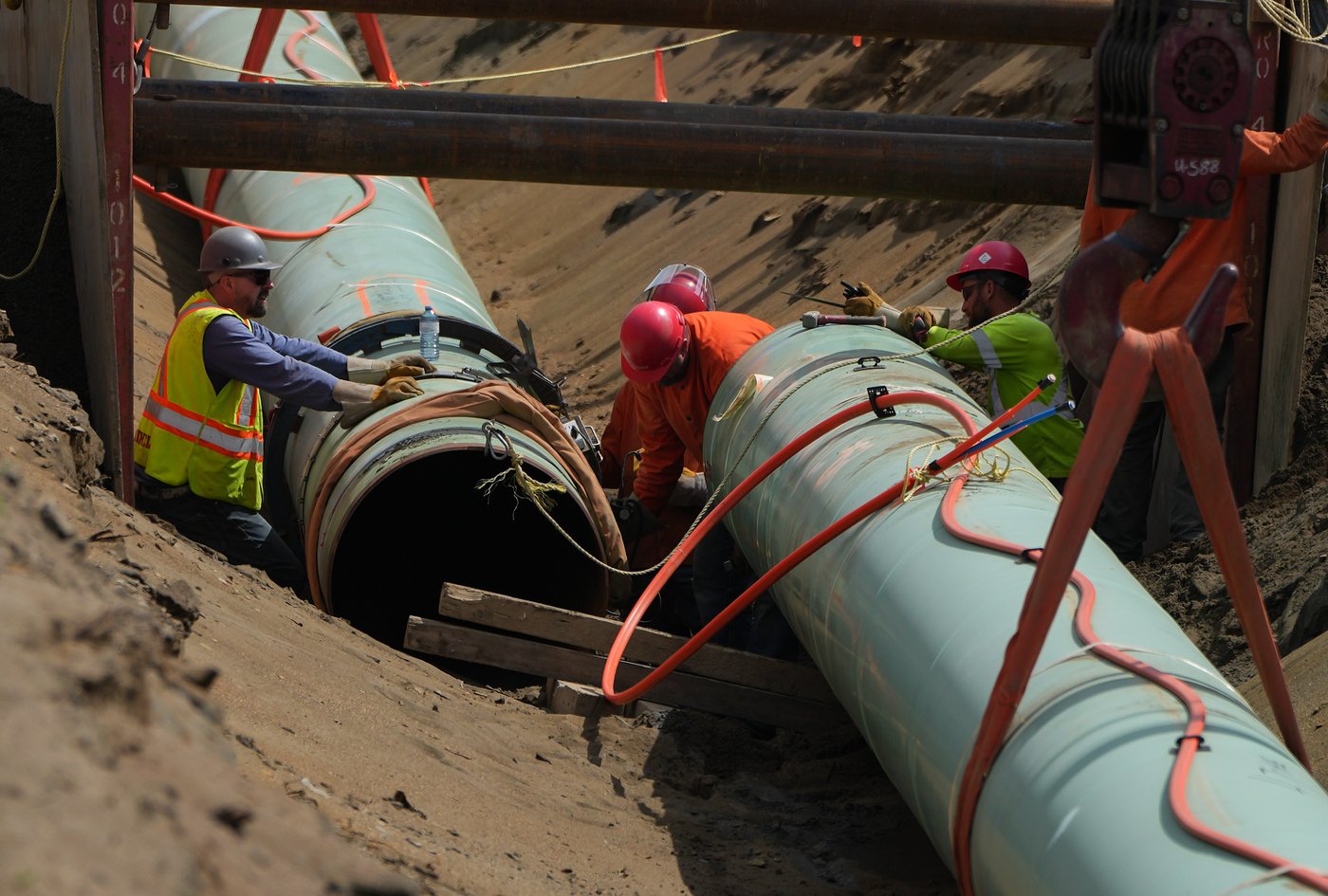
Workers lay pipe during construction of the Trans Mountain pipeline expansion on farmland, in Abbotsford, B.C., on Wednesday, May 3, 2023. THE CANADIAN PRESS/Darryl Dyck
Workers lay pipe during construction of the Trans Mountain pipeline expansion on farmland, in Abbotsford, B.C., on Wednesday, May 3, 2023. THE CANADIAN PRESS/Darryl Dyck (Image Credit: Darryl Dyck, The Canadian Press.)

The band argues that the hurried “national interest” decision must be set aside to allow a full assessment of risks and meaningful consultation to happen before deciding to go ahead with listing this as a “national interest” project.

“An oil spill would devastate the lands, waters, and salmon we all depend on,” Cheam FN said. “We are responsible under our own laws to ensure projects are safe. We know that an oil pipeline project has serious risks, especially a project that places the Fraser River and tributaries in jeopardy. Our communities have a right to understand what those risks are and whether they are actually worth taking.”

Cheam FN Chief Michael Victor said, “We are standing up today to uphold our law. We stand up to hold the Federal Crown accountable. Our Nation believes in Nation-building, but it must treat First Nations as equal constitutional partners. We can have economic prosperity in all our Territories if it is done in respectful partnership. Every Canadian should demand that their Leadership make informed decisions. This pipeline has been labeled to be in the “national interest” without sufficient information, without precise knowledge of the pipeline route and with no study. That is not informed decision-making. That is not informed consent.”

One of the eight bands that filed a legal challenge, Tsartlip First Nation on Vancouver Island, said it filed a Federal Court application for judicial review on Friday, Oct. 30, asserting Ottawa had not “given sufficient information about the project and its potential impacts.”

Adam Olsen, a spokesman for the nation, called the pipeline decision “reckless” and “rushed,” saying in an interview on Monday that Ottawa had failed in its duty to consult Indigenous communities.

“Tsartlip has a responsibility, as has been expressed by our chief and council, to look after its territory, stand up for those places for the past, present, and future,” said Olsen, who is a former B.C. Green legislator.

“These are incredibly important fishing areas for our people, and so the process was rushed. It was through the middle of summer and the government failed its basic test.”

The pipeline was the first project to receive the national interest designation under the Building Canada Act during an announcement by Prime Minister Mark Carney and Alberta Premier Danielle Smith last month.

It means the project would be subject to a fast-tracked, streamlined regulatory process conducted by the federal major projects office.

Olsen said the process is moving too fast.

“The national interest designation concerns a multibillion-dollar publicly funded project that is not expected to be completed until 2032,” he said in the Tsartlip statement. “Yet the consultation and decision-making process happened in less than three months.”

The proposed pipeline would largely follow the path of the existing Trans Mountain pipeline to an export terminal in Metro Vancouver, with an estimated price tag between $35.2 billion and $42.7 billion.

The nine nations involved in challenging Ottawa’s decision are located along the proposed pipeline and tanker routes or use the Fraser River for fishing.

The Boston Bar, Cheam, Lower Nicola, Kwantlen and Kwikwetlem First Nations and the Skeetchestn Indian Band filed their own legal challenges, while the St’at’imc Nation and T’Sou-ke First Nation filed a joint application.

The St’at’imc Chiefs Council, which represents 11 communities along the Lillooet and Fraser rivers, issued a statement on Monday saying it had launched legal action in Federal Court to the government’s designation of the pipeline.

Approving the Pacific Link project without full assessment of risks to salmon and fishing rights, and without deep consultation to ensure the consent of all affected First Nations, is unacceptable and unlawful, the statement said.

The council said its members rely on Fraser River salmon, and the risk of an oil spill from the proposed pipeline’s river crossings was a “heinous” threat to the communities’ fishing rights and way of life.

“The collusion of the federal and provincial governments along with a few industry and corporate elites, who cloak themselves as economic saviours, will force First Nations further into third-world conditions contributed to by the extinction of the Fraser River wild salmon and the collapse of First Nations’ culture and traditions relating to wild salmon,” St’at’imc elder Art Adolph said in the statement.

The Canadian Press contributed to this report.