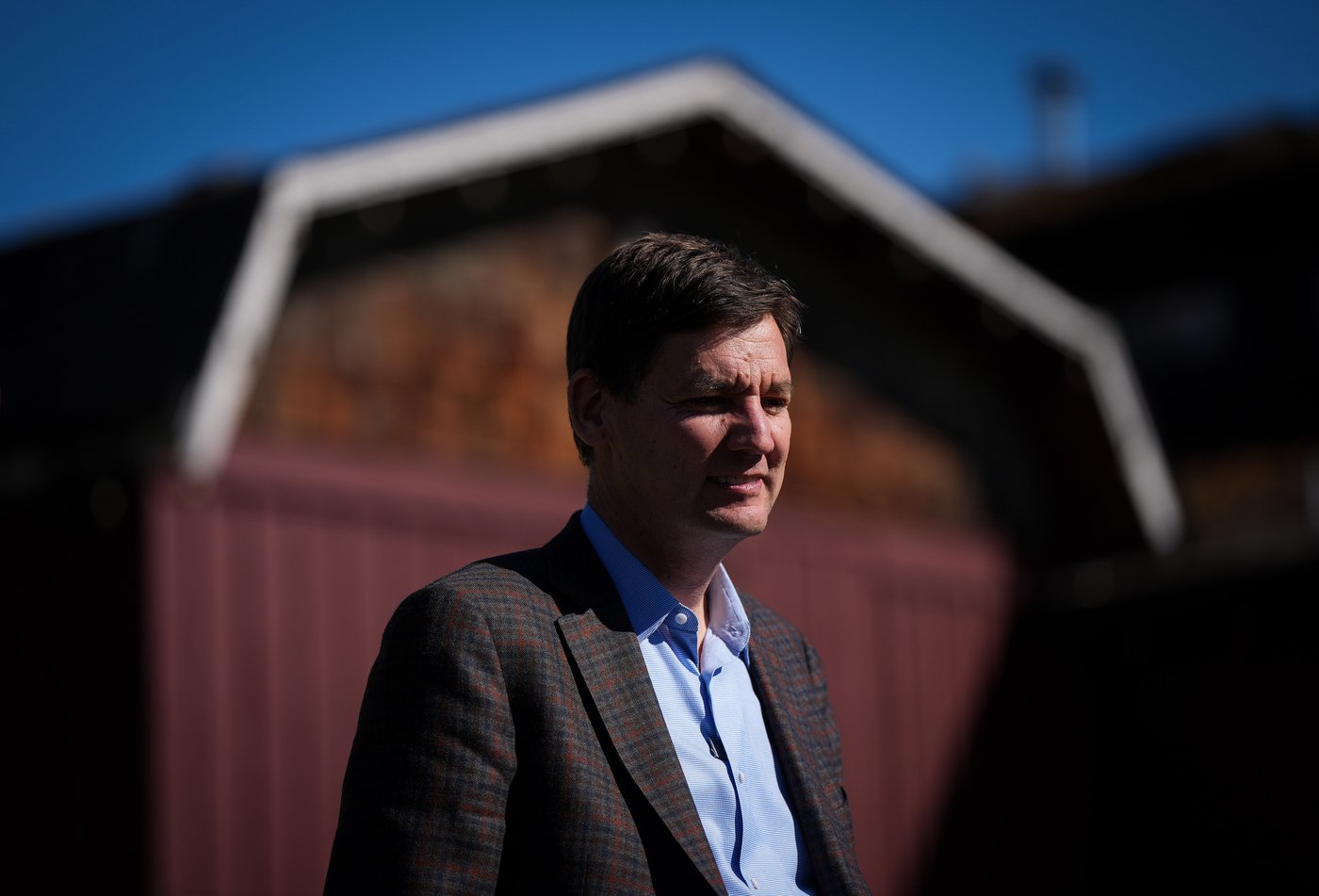
B.C. NDP Leader David Eby tours Merridale Cidery & Distillery during a campaign stop, in Cobble Hill, B.C., on Monday, Oct. 5, 2026. THE CANADIAN PRESS/Darryl Dyck

B.C. party leaders pitch business promises on campaign trail in Surrey battleground

Oct 7, 2026 | 1:00 AM

The leaders of the two largest political parties in British Columbia were in the election battleground of Surrey on Wednesday pitching plans for businesses and the economy as the campaign reached its halfway point.

New Democrat David Eby promised loans of up to a $1 million for small and medium-size businesses affected by the ongoing trade war with the United States, while B.C. Conservative Lorne Doerkson said he would eliminate the PST on certain machinery, equipment and business software.

Surrey is B.C.’s second largest municipality after Vancouver and success there in the Oct. 24 election could be a critical factor.

The NDP said its $500-million Small Business Tariff and Wildfire Relief Fund would provide interest-free loans of up to $1 million for up to 72 months for qualifying small and medium-size businesses recovering from the recent wildfires or tariffs.

Eby said there was concern smaller businesses could be “falling through the gap” of federal tariff supports.

“These interest-free loans will provide the support that the small and medium-sized business leaders have come to us and said they need to be able to get through this period,” he said.

The New Democrats would also offer a $5,000 refundable tax credit for small businesses that employ someone aged between 18 and 30.

“Young people right now are definitely worrying about employment. We’ve seen that among young British Columbians, they’re disproportionately affected by the impact of the tariffs on businesses. It means that opportunities for them to work have been reduced,” Eby said.

Elsewhere in Surrey, Doerkson made the Conservatives’ pitch to businesses, which includes exempting more “productive capital” from PST for three years.

“If we want to supercharge British Columbia’s economy, we need to stop penalizing the very companies trying to build it,” he said.

“Right now, when a local business buys the equipment its workers need, the seven per cent PST acts as a direct penalty on that growth.”

The Conservatives have not provided costings for the plan, which also includes promises to cut red tape, appoint a panel to “simplify” the province’s tax system and approve major new capital projects in 120 days or fewer.

Elsewhere on the campaign trail, BC Green Party Leader Emily Lowan laid out more of her plans for the economy, including a tax on extreme wealth, raising an estimated $22.2 billion through a one-time levy on fortunes above $50 million, followed by an annual wealth tax expected to raise about $5.4 billion a year.

They are also promising provincewide commercial rent protections and new tools for municipalities to address long-term commercial vacancies.

“I hear every day on the campaign trail just how difficult it is to start and maintain a small business in British Columbia,” Lowan said in a statement.

“While other parties are focused on fast-tracking projects for foreign resource corporations, the BC Greens are focused on building strong local economies, where wealth stays in the community, local businesses can grow and every region has the power to shape its own future.”

When Eby called the snap election on Sept. 22, he said British Columbia needed a “firebreak” against U.S. President Donald Trump’s economic attacks and Trump-style politics, which he said were threatening to infect the province.

But more recently, he has said he accepts that not everyone shares his anxieties about the U.S. president, even as Trump’s actions make B.C.’s challenges much worse.

He said on Tuesday that the key matter for voters would be deciding which party can support families during these tough times.

Doerkson said at the start of the campaign that Trump was an “absolute bully,” and that standing up to him required action, not press releases.

Eby said he was trying to express his own sense of anxiety about Trump’s threats, and while not everybody shared his concerns, there was no question Trump’s actions continued to have an impact on British Columbians.

“Whether you believe and accept that Trump is making it much worse, it doesn’t matter because you’re still understanding that the cost of living is significant, that we need a strong public health-care system if you and your family get sick,” he said on Tuesday.

This report by The Canadian Press was first published Oct. 7, 2026.

Ashley Joannou, The Canadian Press