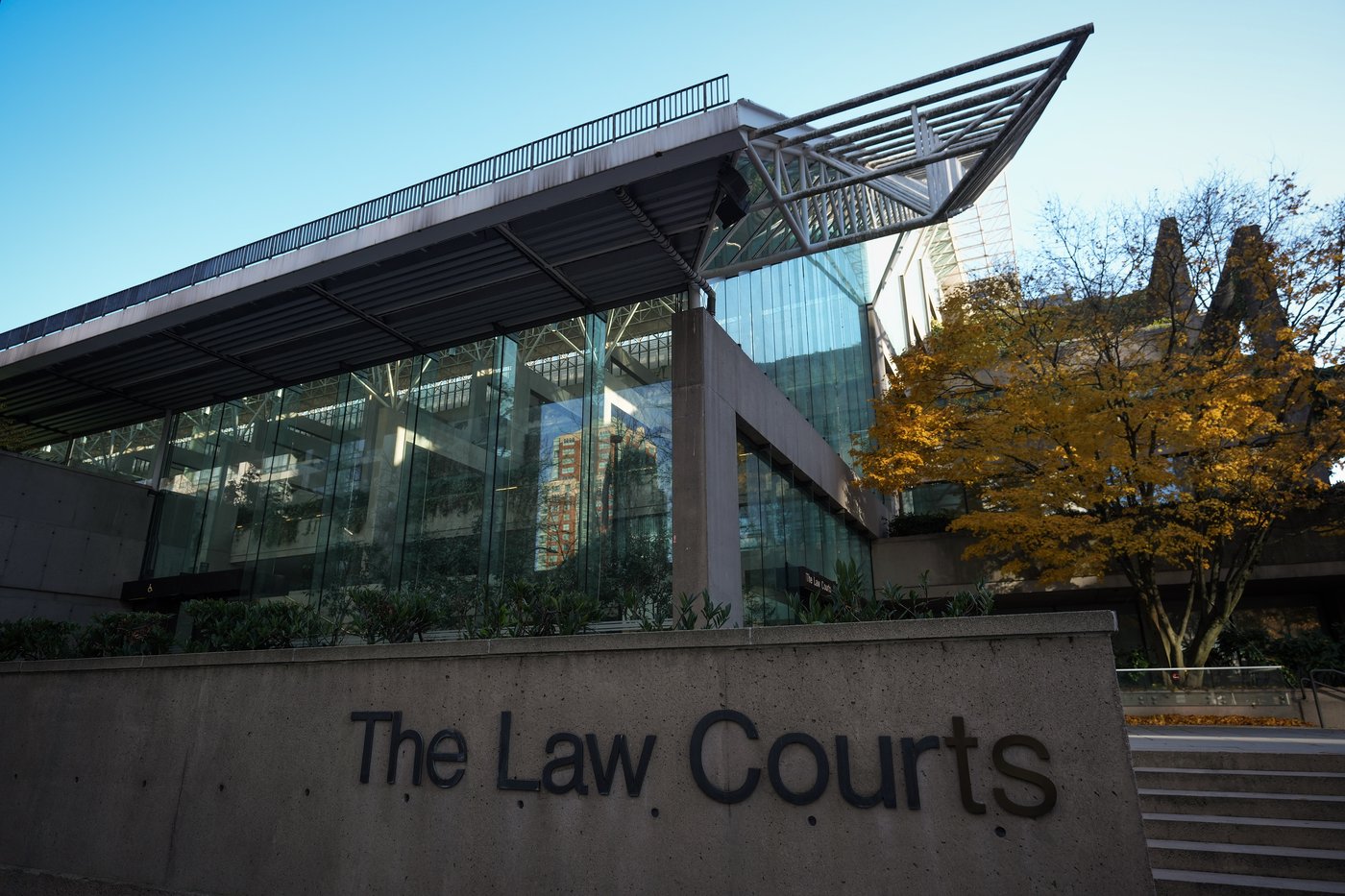
The Law Courts building, which is home to B.C. Supreme Court and the Court of Appeal, is seen in Vancouver, on Thursday, Nov. 23, 2023. THE CANADIAN PRESS/Darryl Dyck

Author Steven Galloway ‘destroyed’ by sex assault allegations, lawyer says

Oct 5, 2026 | 6:28 PM

VANCOUVER — The lawyer for author and former University of British Columbia professor Steven Galloway says the man’s life and career were “destroyed” by sexual assault allegations, while his defamation lawsuit has been delayed for years as he tried to clear his name.

Daniel Burnett told a B.C. Supreme Court judge on Monday that Galloway’s case is mostly about how to calculate damages against the defendants, who spread unproven allegations of rape and sexual assault against Galloway.

Burnett said Galloway was once “a star in the literary world” with a bright future that was “cut very short” when the allegations were made publicly by a former student, and were then spread by others in the academic and literary world.

He said at the opening of the defamation trial that Galloway’s reputation was “tarnished to a degree that is incomparable.”

The sexual assault accusations were made against Galloway in late 2015, and since then, his accusers have fought the defamation case all the way to the Supreme Court of Canada, claiming their accusations were protected speech.

The high court refused to hear the case, after a lower court said that if the defendants’ arguments held, “there would be no legal consequences of any kind” to publicly calling someone a rapist.

In the months after the information came out, dozens of high-profile representatives in Canada’s literary community, including Margaret Atwood and Yann Martel, signed a letter that raised concerns about the university’s process to investigate the complaints against Galloway, calling them secretive and unfair.

Galloway was a tenured professor and the chair of the creative writing program at the University of British Columbia when rumours swirled and spread, and while he was never charged, he was fired from the university.

A report that was later produced for the university by former judge Mary Ellen Boyd concluded the accusations against Galloway were unsubstantiated.

The defamation trial was originally scheduled for 60 days, but Justice Neena Sharma said it will likely take 20 days.

Nine of the people who accused Galloway or repeated accusations against him online have apologized, all of which have been posted on the website gallowayapologies.com.

Chelsea Rooney, one of the original defendants, issued a lengthy apology to Galloway over the weekend, saying she was genuinely sorry for the part she played in causing harm to him.

Rooney said in her statement that because she didn’t know if the allegations were true, she should not have communicated them, and she has come to better understand his position and commitment to clear his reputation.

“I should not have listened only to one side, or allowed that one-sided understanding to shape my communications, my tweets or my participation in the process,” her statement said, much of which was published in the National Post newspaper on Saturday.

Rooney is no longer a defendant in the case.

The court heard that four defendants remain, including his accuser only known as A.B., who isn’t going to attend court to testify.

Glynnis Kirchmeier, who is representing herself as a defendant, told the judge that the court will hear evidence about “how UBC utterly failed to have any reporting mechanisms available” for the proper reporting of sexual assault and that A.B. did “as best she could in a context where it was impossible to do so in the right way.”

Author Mandi Gray and Dana Kagis are also defendants.

After Burnett completed his opening on Monday, Galloway’s wife, Katie Wagner, told the court that Galloway was taken to a mental health facility in Ohio when the allegations came to light in 2015.

She testified that Galloway would become physically ill; he would cry, shake and vomit; and was distraught after the “outlandish” allegations went public in news articles and spread over social media.

Wagner became emotional during her testimony, telling the court that Galloway had panic attacks and sleep troubles that were “horrible.”

When they returned home to Vancouver, she said reporters started calling and showing up to their home with cameras, and the family retreated to Vancouver Island “for a long time” to avoid the publicity.

After the Boyd report came out and found the allegations against Galloway unsubstantiated, she said the faculty association at the university indicated that he should get his job back, but he didn’t.

She said Galloway would withdraw and she became a sort of caretaker for him, driving him to therapy and medical appointments and portioning out medications, taking a toll on her life for the last 10 years.

“I would feel torn. I want to go out and take care of my kids, or do normal things, or go to things, and he would be in there, you know, obsessing over the situation that was so horrible and couldn’t just be dropped. He couldn’t just shed it all, like go downstairs and, you know, live life.”

She said Galloway reacted with “hopelessness” and defeat as the allegations would be repeated, and she tried shielding him from social media.

Wagner told the court that she brought Galloway to a writer’s festival event, insisting that he go, and he “sat in the corner” and later told her how “absolutely awful it felt to go there and see his former life that way.”

The defamation trial continues in Vancouver on Tuesday.

This report by The Canadian Press was first published Oct. 5, 2026.

Darryl Greer, The Canadian Press