Fact File: No evidence of trans shooter ‘epidemic’ in Canada, U.S.

Feb 12, 2026 | 12:45 PM

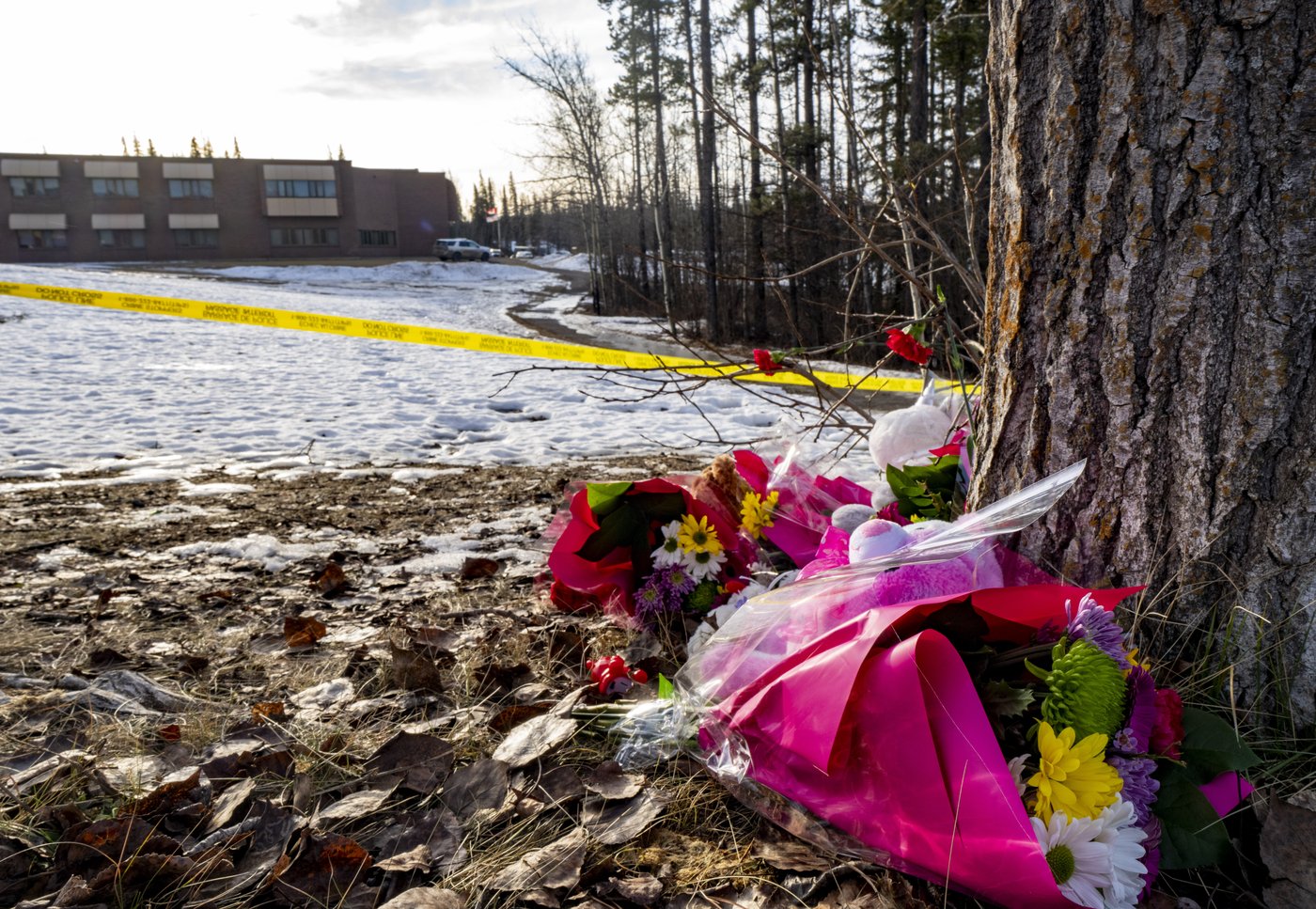
Social media posts claiming a “pattern” or “epidemic” of transgender mass shooters spread online after a fatal shooting in Tumbler Ridge, B.C., this week. Transgender people do not disproportionately commit mass shootings, and in fact represent one per cent or less of all shootings, according to two U.S. databases. Statistics Canada does not track the gender identity of people accused or charged in gun-related crime, but there is no indication any of Canada’s previous mass shooters identified as transgender or non-binary.

THE CLAIM

A mass shooting that devastated the small British Columbia community of Tumbler Ridge sparked a false online narrative about an “epidemic” of transgender mass shooters and their supposed overrepresentation as perpetrators of violent crime.

During a press conference Wednesday, B.C. RCMP said the shooter, 18-year-old Jesse Van Rootselaar, was assigned male at birth but began transitioning about six years ago and identified as female “both socially and publicly.”

Before police confirmed the shooter’s identity, speculation they might be transgender gained traction on social media.

In a post to the X platform Tuesday, B.C. Independent MLA Tara Armstrong wrote that “there is an epidemic of transgender violence spreading across the West.”

Armstrong claimed the Tumbler Ridge shooting and five recent mass shootings in the United States represented a “pattern” of transgender violence.

On Wednesday, Elon Musk shared and commented on a graphic on X that appeared to claim transgender people disproportionately commit fatal mass shootings compared to other demographics.

THE FACTS


The available data on mass shooters is mostly American, and the way researchers define a “mass shooting” varies, meaning it’s hard to pin down an exact number of transgender shooters.

Statistics Canada tracks the gender of people accused and charged in gun-related crime, but it does not include a person’s gender identity.

There are no mass shooter databases in Canada, where such events are rare.

James Densley, co-founder of the Violence Prevention Project, which manages a database tracking mass shootings in the U.S., said transgender perpetrators represent a “handful of cases” compared to the hundreds of shootings that occur annually in the U.S.

The project’s database includes mass shootings with four or more victims killed in a public place. By that metric, the project identified only one case involving a transgender shooter that happened in Nashville in 2023.

Of the 201 mass shooters in the database, its single transgender perpetrator represents half a per cent of all shootings.

“Transgender perpetrators are under-represented in the data, not overrepresented,” Densley said.

The Gun Violence Archive runs a similar U.S. mass shooting database, and founding director Mark Bryant said it identified seven transgender mass shooters since it began tracking in 2013.

“The reality is, seven out of 4000 (mass shootings) is a very small number,” Bryant said, adding that transgender people accounted for no more than one per cent of mass shootings in the last decade, according to the database.

According to Statistics Canada, transgender and non-binary people over the age of 15 represent 0.33 per cent of the population. In the U.S. they represent about one per cent of the population.

“Associating an entire marginalized group with mass violence based on a statistically negligible number of cases has a long and ugly history,” Densley said. “In each case, the perceived pattern said more about the politics of the moment than about any actual causal relationship.”

Data shows the majority of mass shooters are overwhelmingly are cisgender men.

Aaron Devor, a sociology professor and chair in transgender studies at the University of Victoria, said transgender people are more likely to be the victims of murder and other crimes than the perpetrators.

“Anything that we do have data on shows that transgender people are a very very tiny minority among those who commit crimes, and they’re a very tiny tiny minority in society in general,” he said.

Devor added there is no indication any of Canada’s previous mass shooters identified as transgender or non-binary.

“To paint the very small population of transgender people in Canada with one brush based on what one very, very troubled person did is unfair,” Devor said. “I actually believe that most Canadians do not fall for the rhetoric that we’re hearing that tries to blame mass shootings in general on transgender people. I think most Canadians are allies of transgender people and are bright enough to see the fallacy in those claims.”

This report by The Canadian Press was first published Feb. 12, 2026.

Marissa Birnie, The Canadian Press