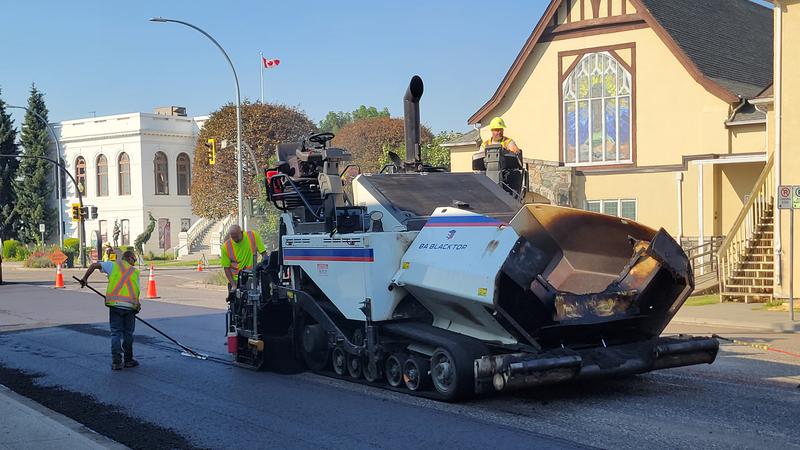
Image: M. Vanden Bosch / PML / Crews from B.A. Blacktop repave Yale Road near the Chilliwack Museum and Cheamview United Church. The City of Chilliwack plans to pave four more roads in October, including roads in Ryder Lake, Yarrow, the Bailey Landfill, and Elm Drive.
Asphalt rehabilitation

City of Chilliwack plans to pave four more roads in October, as portions of downtown area have had asphalt rehabbed

Oct 1, 2022 | 6:00 AM

CHILLIWACK — The city’s paving program has significantly rehabbed parts of Yale Road and Nowell Streets, turning a roughed up portion of downtown Chilliwack into a much smoother ride for motorists and cyclists.

Back in July, the city’s transportation division announced it would rehab Yale Road between Ford Road and McGrath Road in Rosedale, representing a roughly 280-metre stretch of the primary route through Rosedale, as well as Ferry Road from McGrath Road to the dyke. Both were done in July.

Later in the summer, the city added Mayfair Avenue, Willow Drive, James Street, Prairie Central Road, Upper Prairie Road, Chilliwack Central Road, and Yale Road to its paving list, most of which have been completed or substantially completed.

Now, the city has its sights set on four more roads to tackle this month.

In the month of October, Chilliwack plans to improve Karson Road between Robinson Road and the end of Karson, southwest of Yarrow; Elk View Road from Payne Road to Ryder Lake Road; the interior roads of the Bailey landfill, and Elm Drive between Norrish Avenue and Chilliwack Central Road.

If not already completed, asphalt rehabilitation will also occur on such roads as Nowell Street from First Avenue to Yale Road, Spadina from Yale Road to First Avenue, Wellington Avenue between Mill Street and Cook Street, which includes the area around Service Canada and the RCMP community policing office, Yale Road from Main Street to Princess Avenue, and Evans Road at Wells Road.

The City submits several tenders for asphalt rehabilitation work to maintain driving surfaces and reduce maintenance costs. The city’s engineering department recommends repair to roads in the worst condition in each classification based on a survey that is typically updated every five years. Stantec last conducted a comprehensive survey in the late summer of 2017.

In situations where significant deterioration or other upgrades are requisite, minor drainage and curb and gutter improvements often occur adjacent to rehabilitation projects. City engineering staff coordinate timing and scope of improvements with the operations, development and utility departments in order to reduce unnecessary utility cuts in newer asphalt. The city says it aims to increase cost efficiencies and minimize impacts to residents.