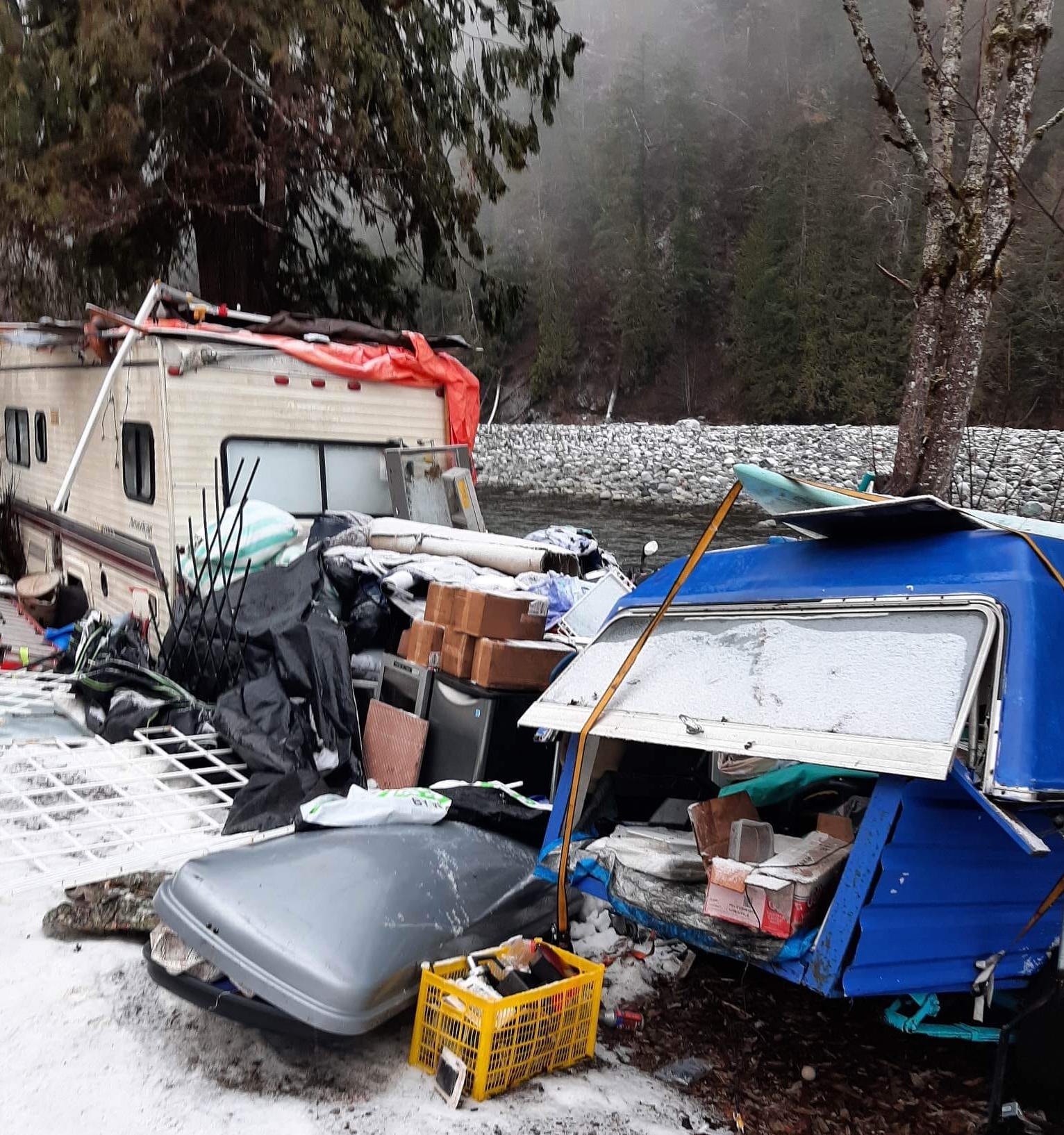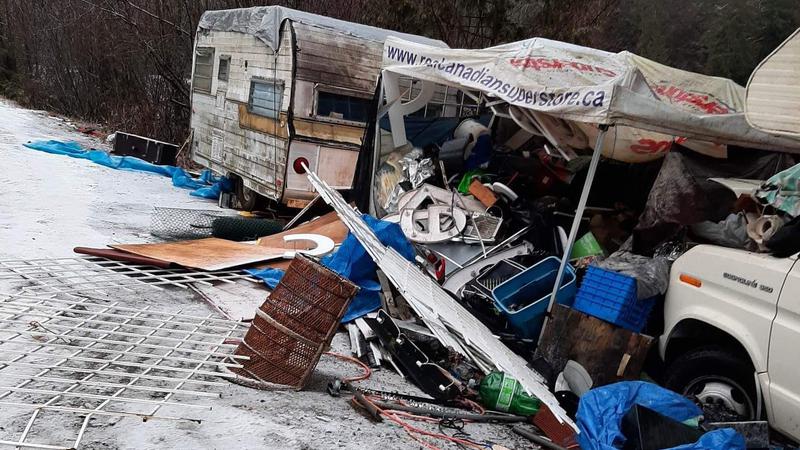
Image: Supplied by Chilliwack Cleanup on Facebook / Chilliwack resident Ross Aikenhead says this homeless encampment about 4.5 kilometres from the Tamihi Rapids bridge has been abandoned, leaving behind an ugly mess that is environmentally detrimental to the nearby Chilliwack River.
Abandoned homeless encampment

Abandoned homeless camp on Chilliwack Lake Road poses an environmental mess, eyesore

Dec 20, 2022 | 12:41 PM

CHILLIWACK — Volunteers with the Chilliwack/Vedder River Cleanup Society are accustomed to hauling away hundreds, sometimes thousands, of pounds of metal, debris and garbage from the shoreline of the Chilliwack River in the Chilliwack River Valley.

They may have another gargantuan task on their hands now that a massive homeless encampment approximately 4.5 kilometers east of the Tamihi Rapids bridge, east of Chilliwack, has been abandoned. The camp consists of a motorhome, RV, trailer, and mounds of toxic junk and debris.

Ross Aikenhead, a Sardis resident who volunteers with the Cleanup Society, reports that this homeless camp is one of about nine encampments in the Chilliwack River Valley. Some are tucked away off side dirt roads in the mountainous, remote areas off Chilliwack Lake Road where bylaw enforcement staff seldom, if ever, patrol.

But this one is particularly egregious, especially in light of the environmental consequences.

“It’s not a good situation,” Aikenhead said. “This camp I’m talking about, it looks like the guy split up with his wife and took everything he owned and lived on the road. All the sewage and garbage from this encampment is going straight into the environment. This is one of the main spawning rivers in this area. It’s not somewhere to be dumping stuff. There’s junk all the way down to the river.”

Image: Supplied by Chilliwack Cleanup on Facebook.

While Aikenhead says he’s happy to help organize a cleanup and mobilize volunteers, or email Chilliwack-Kent MLA Kelli Paddon, he says he’s constrained by motor vehicle laws in British Columbia as it pertains to the removal of portions of the homeless encampment.

“We can’t technically, legally touch the motorhome, RV and utility trailer,” Aikenhead said. “They belong to somebody, and it becomes a legal issue. You can’t touch vehicles without authorization from ICBC or the RCMP.”

Fortunately, it won’t just be the river society pitching in to help clean up the unmitigated disaster. Aikenhead says a guy he knows at Thurston Meadows Campground has a mini-excavator, and five more people living out at Post Creek, a small residential subdivision near Chilliwack Lake Road, are pretty involved in resolving the ugly situation.

“I just throw it out there on Facebook (on Chilliwack Cleanup) and try to get support, get out and do what we can do,” Aikenhead said. “This is kind of a last-ditch attempt for me. Unless the public knows about it, it kind of goes sight unseen, but the government needs to do something about it. That’s an environmentally sensitive area. Sooner or later, all that crap will wind up in the river. Somebody will come along and think it’s a good idea to start it on fire.”

Aikenhead says he plans to contact the Ministry of Forests, Lands, and Natural Resource office, FVRD board chair and Chilliwack Councillor Jason Lum, and Chilliwack-Kent MLA Kelli Paddon to urge them to take action. He hopes to organize a clean-up effort sometime in the new year so that the eyesore doesn’t persist.

As for why the government itself doesn’t tackle the problem head-on, Aikenhead says it boils down to a lack of funding.

:”The problem is, there’s no funding,” Aikenhead pointed out. “The government over the years has cut back the Ministry of Forests and the B.C. Conservation Officer Service to where there’s basically nothing. The government won’t give them money unless it’s a severe hazard to the environment or public safety. The illegal dumping has significantly dropped in the last 5-10 years, but now they’ve got a growing problem with homelessness. Technically, you are allowed to camp on Crown land for 14 days, but then you must leave the area. That isn’t enforced either. This guy had been there about six months.”