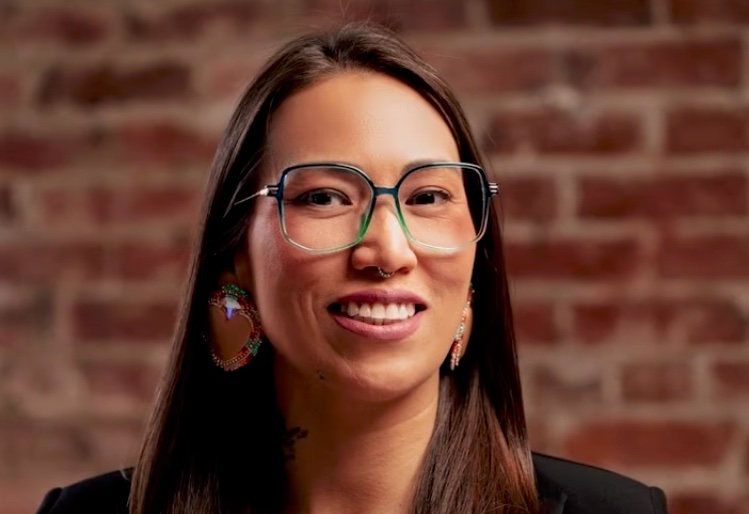
Chilliwack-Cultus Lake MLA Á’a:líya Warbus. (Image Credit: Chilliwack-Cultus Lake MLA Á’a:líya Warbus.)
New leadership, new tone

Chilliwack-Cultus Lake MLA returns to B.C. Conservatives, cites change in leadership

Sep 23, 2026 | 8:50 AM

CHILLIWACK – Less than a month after she left the party to sit as an independent, Chilliwack-Cultus Lake MLA Áʼa꞉líya Warbus says she has confidence in the B.C. Conservative Party under interim leader Lorne Doerkson ahead of next month’s provincial election.

In a social media post Tuesday night (Sept. 22), Warbus said the last 39 days have been some of the most challenging moments of her public life. She said she had no choice but to speak up during the tenure of former leader Kerry-Lynne Findlay, who resigned this past Sunday, Sept. 19.

Warbus left to sit as an independent on August 31 but has now returned to the party.

“The last 39 days have been some of the most difficult and consequential of my time in public life,” Warbus said. “There were many moments I took pause to reflect on the evolving Conservative movement, but as many of you have seen, this has been a pinnacle of principle not to be ignored. I left the BC Conservative caucus because I believed I had to. I could not stay silent when the direction of the party no longer reflected the kind of principled, responsible, and centre right conservatism we all need and deserve. That matters deeply to me. I stand by that decision. I am returning to the BC Conservative team with my values intact, my voice intact, and my commitment to Chilliwack–Cultus Lake stronger than ever. I know exactly why I left, and I know exactly why I am coming back.”

Warbus said she’s worked first-hand with Doerkson and believes she is a respected party member with him at the helm.

“I know Lorne, I have worked with him, and I trust him,” Warbus wrote. “I believe I am respected as part of his team where different perspectives can be heard without compromising our shared purpose. That matters deeply to me. With Kerry-Lynne Findlay stepping down and Lorne Doerkson taking the helm, there is an opportunity to reset — to move back toward a responsible, progressive-conservative approach focused on the enormous challenges facing all British Columbians. Direction is key and when circumstances change, we have a responsibility to recognize when action is both appropriate and necessary.”

Warbus said she did not enter public service to engage in partisan bickering from within her own party. She wants to redirect the focus back to public priorities like healthcare and affordability.

“I did not enter politics to spend my time fighting other conservatives. I came here to fight for the people of Chilliwack–Cultus Lake and for a better British Columbia,” Warbus wrote. “My priorities have not changed. British Columbia is facing serious fiscal challenges. Families are struggling with affordability. People are the focus, and everyone deserves to feel safe in their communities. Too many people are suffering from mental illness and addiction and being left without meaningful treatment. Our health-care system is under enormous strain, to the point of critical mass, and health care workers are burning out. Parents, teachers and students feel the strain in our schools, and we need to get back to the basics of quality education measured by reasonable and consistent standards.”

On the issue of reconciliation and the Declaration on the Rights of Indigenous Peoples Act, Warbus said she’s willing to consider an alternative to the legislation.

“On reconciliation, I believe British Columbia needs something that has been missing from the debate: authentic Indigenous voices with lived experience, leaders of First Nations, Industry and Business leaders at the table,” Warbus said. “This includes the voices willing to ask difficult questions. If DRIPA is not the answer, then we need to roll up our sleeves and get to an acceptable framework to move reconciliation, and the land question forward. I am Stó:lō. I have lived these issues my entire life. I have seen the devastating consequences of inter-generational trauma and suffered the losses of member after member from my own family to these dire circumstances. I believe in reconciliation. I also believe any legislation that addresses Title must be practical, transparent, and capable of bringing Indigenous and non-Indigenous British Columbians forward together. Division will only serve to distinguish the will and compassion we need to do the work. I want to be at that table — not shouting at it from the sidelines.”