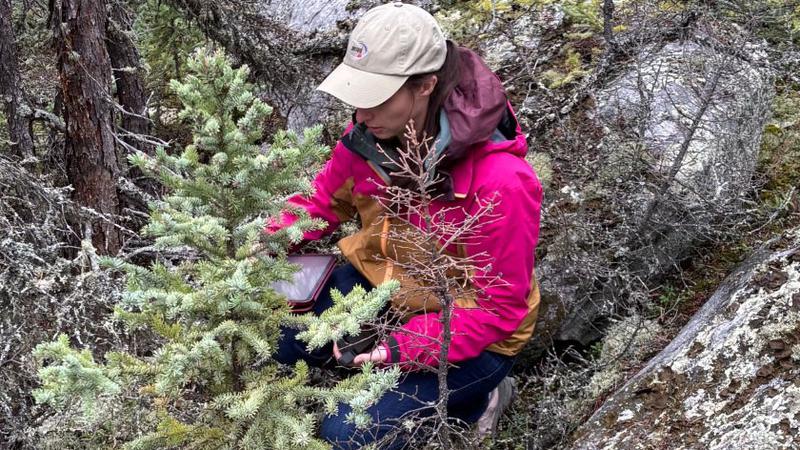
Image: UFV / Provided / Dr. Lauren Erland preparing a geocache site in the Yellowknives Dene First Nation.
COMMUNITY RESEARCH
UFV researchers join forces to help improve food security for northern Indigenous groups
Nov 30, 2025 | 1:54 PM
-
Share on Facebook
-
Share on Bluesky
-
Share on X
- Copy Link
ABBOTSFORD — Two experts from the University of the Fraser Valley (UFV) have used their seemingly differing backgrounds to cook up better food security up in northern Canada.
Dr. Cindy Jardine and Dr. Lauren Erland, UFV research chairs for Health and Community and Berry Horticulture, respectively, have both received a national grant from the Canadian Institutes of Health Research.
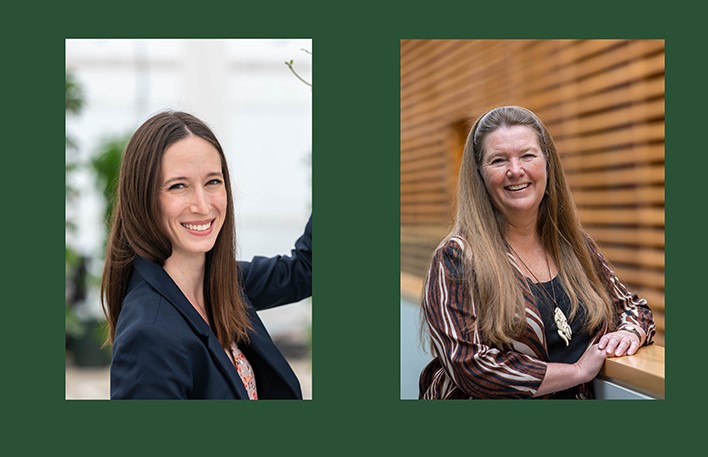 Dr. Lauren Erland (left) and Dr. Cindy Jardine, both federally funded Canada Research Chairs at UFV (Jardine in Health and Community and Erland in Berry Horticulture), joined forces for a food security research project with Indigenous partners in the Yellowknives. / UFV / Provided
The Catalyst project, “Strengthening and Enhancing Agriculture for Indigenous Community-Driven Climate Change Food Security in Northern Canada”, draws on both doctors’ expertise in plant science and on community outreach with Indigenous communities in the North, particularly the Yellowknives Dene First Nation.
