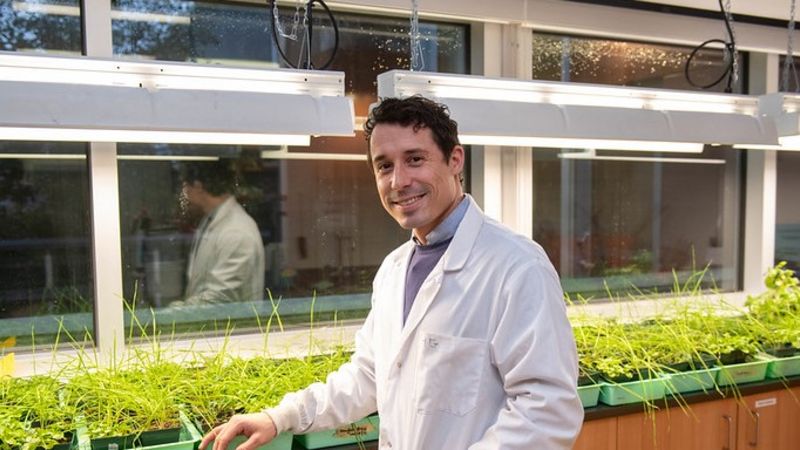
Image: UFV / Provided / Dr. Harley Gordon in the biochemistry lab at the University of the Fraser Valley.
PLANT ADAPTATION

UFV biochemist helps discover breakthrough in plant stress research

Nov 29, 2025 | 9:39 AM

ABBOTSFORD — A local researcher has helped strike new ground in the field of plant adaptations.

Dr. Harley Gordon, an assistant biology professor at the University of the Fraser Valley, was part of a team that discovered a new method of plant hormone synthesis in a range of species.

“We’ve discovered the main way that most plants appear to create salicylic acid,” Gordon noted. “We’ve identified brand new biosynthetic enzymes for the natural production of salicylic acid.”

Salicylic acid plays a major role in the way plants keep themselves healthy, mediating growth and defence against insects or bacteria, as well as helping humans with pain relief.

“Plants are sessile, which means they cannot run away when they are exposed to stressors. During stressful times, such as drought, being eaten by animals, or frost, they often experience spikes in certain hormone concentrations, and that can cause changes in their biochemistry as the plant is trying to adapt or defend itself from damage.”

Most research historically relied on Arabidopsis plants, but Gordon’s team discovered that the model plant for biology studies is actually an “anomaly” – the species doesn’t make salicylic acid in the way most plants do.

“Through our research, we have shown how salicylic acid is made in plants, and that the conventional wisdom from the model species Arabidopsis doesn’t apply to the vast majority of plant species,” said Gordon. “This means that previous work in Arabidopsis tells us very little about salicylic acid in wheat, blueberries, corn, rice, or soybeans.”

These new findings pose a significant shift in the field by helping other scientists better understand crop tolerance. It’s a pathway to how plants adapt, defend themselves and cope with climate change.

“With our work. we show how easy it has been to just assume that the prior assumptions were correct.”

More information on the team’s results is available through the scientific publication here.