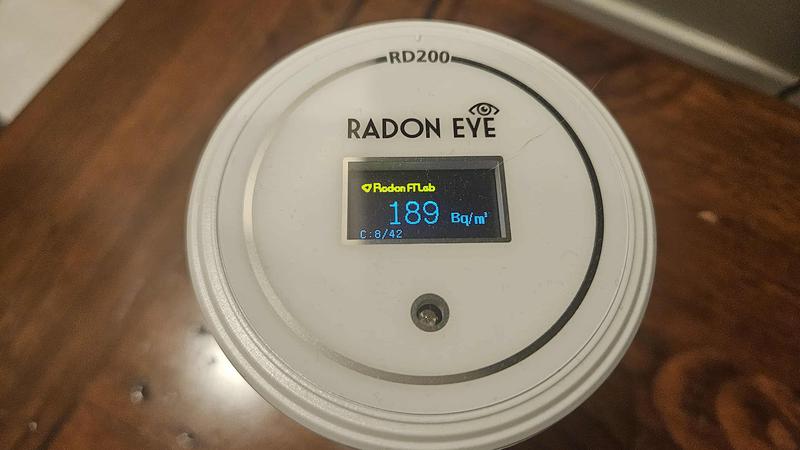
Image: Mike Vanden Bosch / Pattison Media / A radon detector as pictured in this November 5, 2025 image.
Radon awareness

Chilliwack to feature billboards about dangers of radon gas during Radon Action Month

Nov 5, 2025 | 7:11 AM

CHILLIWACK — Realtors across British Columbia are teaming up with two other organizations in the province during November to urge the public to test their homes for radon, a colourless, odourless radioactive gas that can adversely impact people’s health.

November is Radon Action Month, and the BC Real Estate Association (BCREA), BC Lung Foundation, and Real Estate Foundation of BC are teaming up to urge the public to test their homes for radon gas.

Roadside billboards will be appearing in cities like Chilliwack, Kamloops and Kelowna, in addition to ads on radio, TV, and social media throughout the province.

A Canada-wide study released in 2024 says radioactive radon exposure is on the rise and continues to be a critical public health concern. Radon forms naturally when uranium, thorium or radium — radioactive metals — break down in rocks, soil and groundwater. Exposure comes from breathing radon in air that comes through cracks and gaps in buildings and homes.

It’s the second-leading cause of lung cancer in Canadians, especially for those who don’t smoke.

“We’re more than a dozen years out from understanding how the Canadian residential radon problem has changed, and indeed it has changed,” said the scientific lead on the report, Aaron Goodarzi, a professor of biochemistry and molecular biology at the University of Calgary’s Cumming School of Medicine.

Goodarzi said that in 2012, about seven per cent of homes in Canada were found to have above Health Canada’s safe level of radon — 200 becquerels per cubic metre.

In 2024, 75,000 readings were taken from urban and rural residential buildings across Canada. Data from the 2021 census was also used.

“This is now 17.8 per cent, so that’s up more than double, 2 1/2 times greater, in terms of a property exceeding Canada’s guideline,” he said.

Exposure comes from breathing radon in air that comes through cracks and gaps in buildings and homes.

Despite a traditionally low level of public awareness, radon continues to be a threat to homeowners and their families across British Columbia. Exposure to the colourless, odourless radioactive gas is the second-highest cause of lung cancer in Canadians after smoking, estimated to cause over 3,000 lung cancer deaths in the country each year.

Running for the second straight year, this joint public awareness campaign aims to direct British Columbians to a landing page, RadonKills.ca/BC, where they can find crucial information about this “silent killer,” including how to test for and remediate high levels of radon in their homes.

“Radon is a risk that’s not going away,” said BCREA CEO Trevor Koot. “The threat is real, and the only way to know if your home has high radon levels is to test.”

While homes with elevated radon levels can be found across Canada, the BC Interior has some of the highest residential radon levels in the country, making the location of this awareness campaign particularly important. The timing is also important because radon levels are highest in homes during the heating season between October and April.

“Testing your home for radon can make all the difference in keeping you and your family safe. As the second leading cause of lung cancer, awareness of radon is so important, especially for areas in our province at greater risk,” said BC Lung Foundation President & CEO Christopher Lam.

To spread the word about how B.C. residents can protect themselves and their families, the public awareness campaign will place ads on radio, TV, and social media throughout the province, and roadside billboards in Chilliwack, Kamloops, and Kelowna.

BCREA, the BC Lung Foundation, and the Real Estate Foundation of BC encourage all British Columbians to educate themselves and test for radon. Check out RadonKills.ca/BC for more information.