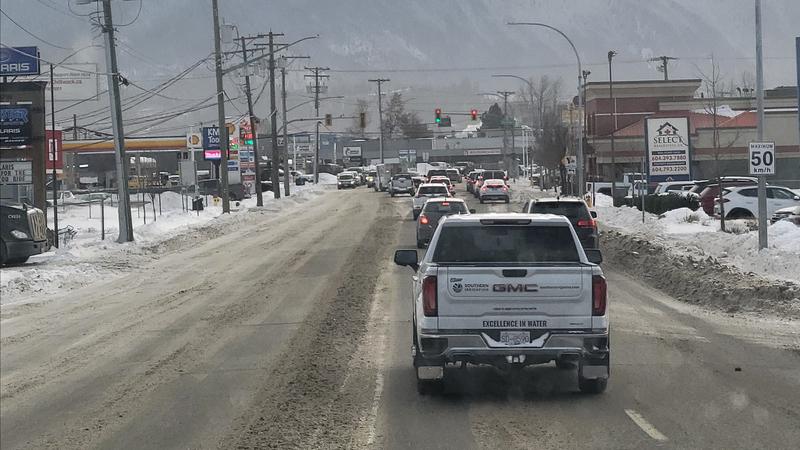
Image: Mike Vanden Bosch / PML / Roads like Yale Road in Chilliwack, shown here, could be a sheet of ice by Friday, according to a multi-hazard weather forecast issued by Environment Canada. The national weather agency is warning Fraser Valley residents to consider postponing non-essential travel now that blowing snow, wind chills of -25, and the likelihood of ice pellets and freezing rain are in the forecast for Friday.
Freezing rain Friday

Blowing snow to begin early Friday, followed by freezing rain in Chilliwack

Dec 22, 2022 | 1:41 PM

CHILLIWACK — As if the -23 wind chill weren’t bad enough today, Environment Canada is warning it could get even worse tomorrow in Chilliwack, Abbotsford and Hope.

To make matters worse, primary roads like Yale Road in Chilliwack could turn into a sheet of ice by Friday if weather forecasts come to fruition.

Environment Canada is warning that a multi-hazard storm will bring blowing snow shortly after midnight tonight (Thursday), followed by ice pellets and the likelihood of freezing rain Friday (Dec. 23), according to a winter storm warning issued at 9:54 a.m. Thursday.

Environment Canada emphasizes that travel conditions will be challenging due to heavy snow, ice pellets, freezing rain, and rain on snow or ice, followed by heavy rain, throughout the Fraser Valley to include Chilliwack, Abbotsford and Hope.

Heavy snow totaling 15-25 centimetres will be followed by freezing rain and heavy rain, high winds and reduced visibility in blowing snow. Wind chills will remain near -25, and freezing rain will likely build up to make surfaces very slippery.

Local blowing snow is possible in strong easterly winds resulting in near zero visibilities. Furthermore, freezing rain is expected during the transition from snow to rain, which could cause significant impact on road and sidewalk conditions, as well as ice build up on trees leading to branches breaking. Periods of freezing rain could continue into Saturday afternoon, Christmas Eve.

Authorities are urging Fraser Valley residents to postpone non-essential travel until winter conditions improve. Visibility will be suddenly reduced to near zero at times in heavy snow and blowing snow. Localized flooding in low-lying areas is possible. Ice build-up may cause tree branches to break.