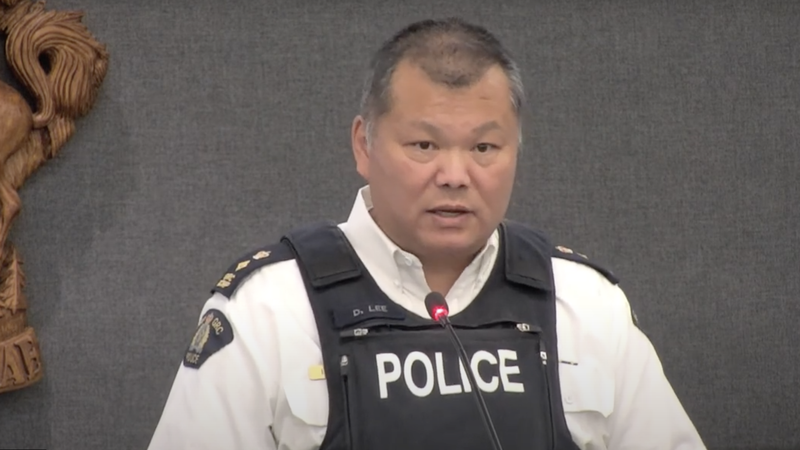
Image: Screenshot, City of Chilliwack meeting / Chilliwack RCMP Superintendent Davy Lee told Chilliwack City Council members back on August 2 that fewer people are seeking careers in policing due to a shifting narrative around how police are perceived, the defund police movement, prompting good candidates to consider careers in other industries and sectors instead of policing.
RCMP funding

Premier Eby’s pledge to hire more RCMP officers contrasts with what Chilliwack RCMP Supt. told council in August

Nov 24, 2022 | 9:27 AM

VICTORIA — B.C. Premier David Eby’s pledge to spend $230 million over the next three years to hire 277 RCMP officers to work across the province could run into recruiting problems.

Eby made the announcement Wednesday night (Nov. 23) in the latest of a series of public commitments after being sworn into office last Friday, Nov. 18 in Vancouver.

Eby has said the the $230 million will include plans to fill vacancies in smaller, rural RCMP detachments and regional units, and hire more police personnel devoted solely to specialized units like major crime, sexual exploitation of children, and money laundering.
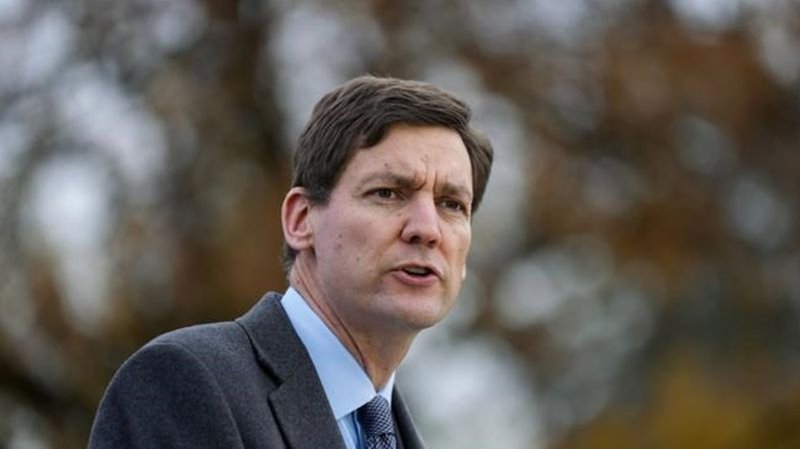
Image: Supplied by Canadian Press / Premier David Eby announced a bold plan Wednesday night (Nov. 23) to hire 277 RCMP officers to serve across B.C. However, RCMP Superintendent Davy Lee told Chilliwack City Council in August that there are vastly fewer applicants seeking careers in policing in recent years.

Eby’s pledge could run into logistical issues like recruiting, an issue that Upper Fraser Valley RCMP detachment officer-in-charge Davy Lee touched on as recently as August of this year.

Superintendent Lee, the officer-in-charge (OIC) of the detachment, told Chilliwack City Council members at its meeting back on August 2 that the narrative around policing has shifted to the point that good candidates are largely bypassing law enforcement and considering other careers.

Lee attended the August meeting to present a report about RCMP activities in the community over the past year. After Lee completed his report, Chilliwack councillor Bud Mercer asked Lee about vacancies within the federal police force and whether the RCMP was experiencing personnel shortages.

“It’s across the board,” Lee told Mercer and council members. “We’re definitely not unique in this situation. Chilliwack RCMP are no different than other RCMP within the Lower Mainland or across the province, or even across the country.”

Lee said municipal police agencies in the Lower Mainland are also suffering from a lack of candidates. He attributed it to a shift in how people perceive police.

“I know our municipal partners, whether it’s Vancouver Police or Abbotsford Police, they’re also suffering as well because, I think, due to the narrative in the last year or so, regarding defunding the police, the police brutality incidents, examples highlighted in the news, sensationalized by the news, has probably detracted from very good candidates even considering policing as a good career choice,” said Lee, who has been a police officer for approximately 32 years.

As a result, Lee said, there’s been a corresponding decrease in the number of candidates applying for a career with the RCMP or city police agencies.

“I think that has resulted in a lack of applicants to the various police forces, so because of that reason, we’re not finding the volume of applicants, and therefore not processing,” he said. “Even the application, I think it’s one in 10 I used to hear that are successful that make it through the process. So, there you go, you see what the odds are in order to gain a lot of applicants to be sent to Regina [RCMP Police Academy] or even the Justice Institute in New Westminster.”

Eby touched on the number of staffing vacancies at a news conference Wednesday night, but did not address how the proposed funding would take into consideration lower numbers of applicants seeking a career in policing.

“Right now staffing vacancies and service level reductions are affecting law enforcement in B.C.,” Eby said. “This impacts the safety of officers and the public.”

The money, part of the New Democrat government’s Safer Communities Action Plan, will allow the RCMP to reach full staffing levels in B.C. of 2,602 officers, he said.

“In order to address public safety concerns head-on, there needs to be adequate staffing resources,” Eby said.

Since being sworn in to replace former premier John Horgan, Eby has pushed for cost-of-living credits like the $100 credit for B.C. Hydro residential customers, public safety plans focused on mental health teams and repeat offenders enforcement, and housing legislation designed to increase the supply of homes in B.C.

“It’s critical our police force is keeping up with our population growth in the province,” said Eby. “We added 100,000 people to our province last year. We expect to set another record this year with people moving to B.C.”

The Opposition Liberals say random acts of violence throughout the province, but especially in Vancouver, have people fearful for their safety.

The Liberals say random violent crime increased under Eby’s recent watch as attorney general, where repeat offenders were often released only to reoffend.

The government announced earlier this week a directive to Crown counsel to consider during bail hearings the risk that violent offenders pose to public safety.

Solicitor General Mike Farnworth, who is also public safety minister, said the money will allow the RCMP to be fully staffed.

“We will be working with Public Safety Canada and (RCMP) E Division in terms of recruitment and filling those vacancies,” he said.

Deputy Commissioner Dwayne McDonald, the commanding officer of the B.C. RCMP, said in the statement that he welcomes the funding because it will have a direct effect on public safety.