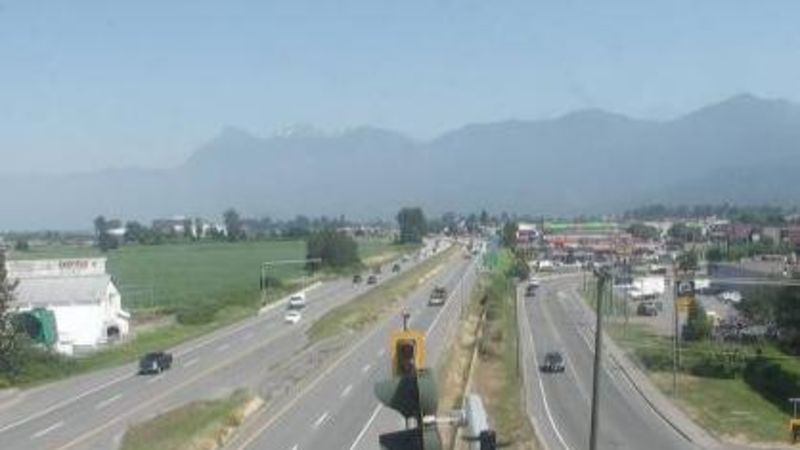
Fraser Valley air pollution alert to last all week
-
Share on Facebook
-
Share on Bluesky
-
Share on X
- Copy Link
CHILLIWACK — Not only is it an unpleasant time to be outside during this week’s summer heat wave, but so is the air quality.
Metro Vancouver Regional District has extended its Air Quality Advisory for eastern sections of Metro Vancouver and the Fraser Valley, including Chilliwack, because of high concentrations of ground-level ozone that are expected to linger throughout the week, according to a statement released by the regional government today (Jul. 27 ).
Hot and sunny conditions are forecast to continue through the weekend. Wildfire smoke from the ongoing Nohomin Creek fire near Lytton, estimated at 2,364 hectares as of today (Jul. 27), may occasionally be contributing to hazy conditions across the region. However, there has been no significant impact on measured fine particulate matter concentrations at ground-level.
Metro Vancouver says ground-level ozone is created when nitrogen oxides and volatile organic compounds react in the air in the presence of sunlight. Ground-level ozone is not emitted directly into the air. It is formed when nitrogen oxides (pollutants emitted when fuels are burned) and volatile organic compounds (emitted from solvents and other sources) react in the air in the presence of sunlight. The highest levels of ground-level ozone are generally observed between mid-afternoon and early evening on summer days.
